• Required reading for all forum users!!!

    Welcome!
    Register to access the full functionality of the GSResources forum. Until you register and activate your account you will not have full forum access, nor will you be able to post or reply to messages.

    A note to new registrants...
    All new forum registrations must be activated via email before you have full access to the forum.

    A Special Note about Email accounts!
    DO NOT SIGN UP USING hotmail, outlook, gmx, sbcglobal, att, bellsouth or email.com. They delete our forum signup emails.

    A note to old forum members...
    I receive numerous requests from people who can no longer log in because their accounts were deleted. As mentioned in the forum FAQ, user accounts are deleted if you haven't logged in for the past 6 months. If you can't log in, then create a new forum account. If you don't get an error message, then check your email account for an activation message. If you get a message stating that the email address is already in use, then your account still exists so follow the instructions in the forum FAQ for resetting your password.

    Have you forgotten your password or have a new email address? Then read the forum FAQ for details on how to reset it.

    Any email requests for "can't log in anymore" problems or "lost my password" problems will be deleted. Read the forum FAQ and follow the instructions there - that's what we have one for...

  • Returning Visitors

    If you are a returning visitor who never received your confirmation email, then odds are your email provider is blockinig emails from our server. The only thing that can be done to get around this is you will have to try creating another forum account using an email address from another domain.

    If you are a returning visitor to the forum and can't log in using your old forum name and password but used to be able to then chances are your account is deleted. Purges of the databases are done regularly. You will have to create a new forum account and you should be all set.

Electrolytic rust removal

  • Thread starter Thread starter Adler
  • Start date Start date
Screw draining the tank. :eek:

Keep it full of stabilized gas, the bike will fire right up when you decide to wake it up for the season. :D

.


but it would be a fire hazard undeneath my bed!!!
I would have to take greater care when smoking there
also seals can fail and then what you find a crank full of gassy oil and a rusty tank

how can I put my shiny beautiful tank in a cold garage! its cruelty is what it is
 
Last edited:
Just imagine if *everyone* found their answer when they used the search option.


then there would be no friendly discourse
some folks cant grasp boolena logic

also there is no effective tagging of topics so slogging through material is just plain evil

I prefer the friendly well intentioned advice over the dusty tomes that some of the threads turn into
 
then there would be no friendly discourse
some folks cant grasp boolena logic

also there is no effective tagging of topics so slogging through material is just plain evil

I prefer the friendly well intentioned advice over the dusty tomes that some of the threads turn into


WERD!......
Exactly my point.
 
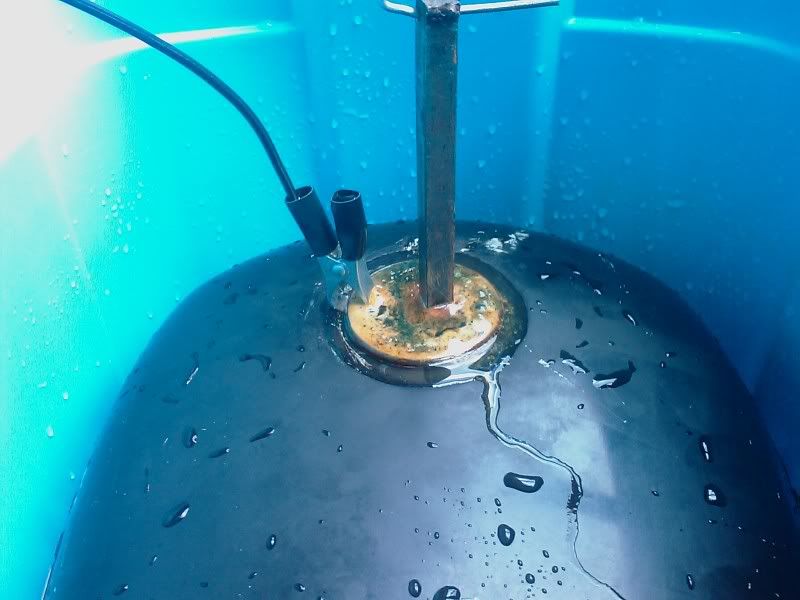
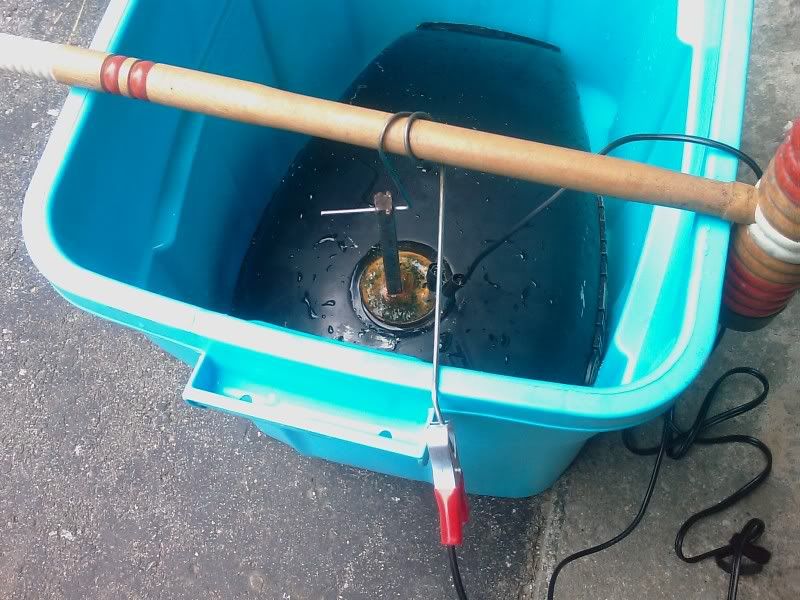
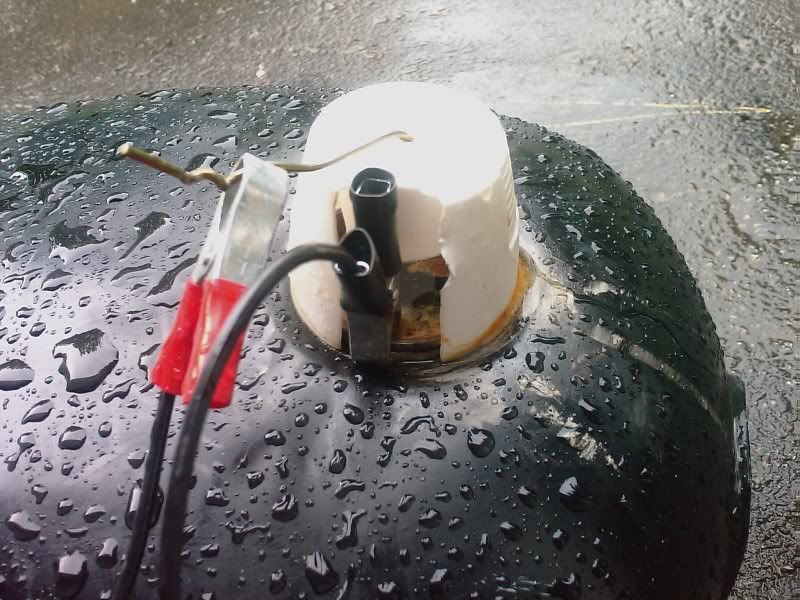
tank submerged, piece of metal bar suspended in the fill opening using piece of metal coat hanger, another piece of metal coat hanger hooked into the fill opening. the charger is a motomaster 6/12v charger and the clips are attached to the hanger pieces....

anyone see anything wrong with this?

hey there, i ve been using electrolysis to derust mostly all of my parts, and it works awesome!

but back to your problem.. the negative should always be on the tank itself, and if you wanna derust the INSIDE of the tank you connect the positive to the suspended hanger INSIDE the tank, but if you wanna de-rust the OUTSIDE you put the sacrificial metal OUTSIDE, it woks point of view, what ever is facing the positive charge will be the one that will be cleaned, and trust me if you put in outside long enough the paint will come off

quick note after derusting, rinse and line it with oil or gasoline as it will rust immediately after exposure to air
 
So here some pictures of the electrolysis so far, because i know you guys like pictures...

This was my first setup, bar suspended in fill hole...
IMAGE_029.jpg

You can see rust accumulating at the top
IMAGE_030.jpg

I later switched to a folded hanger style sacrificial node and here it is after a length of time in the tank
IMAGE_032.jpg

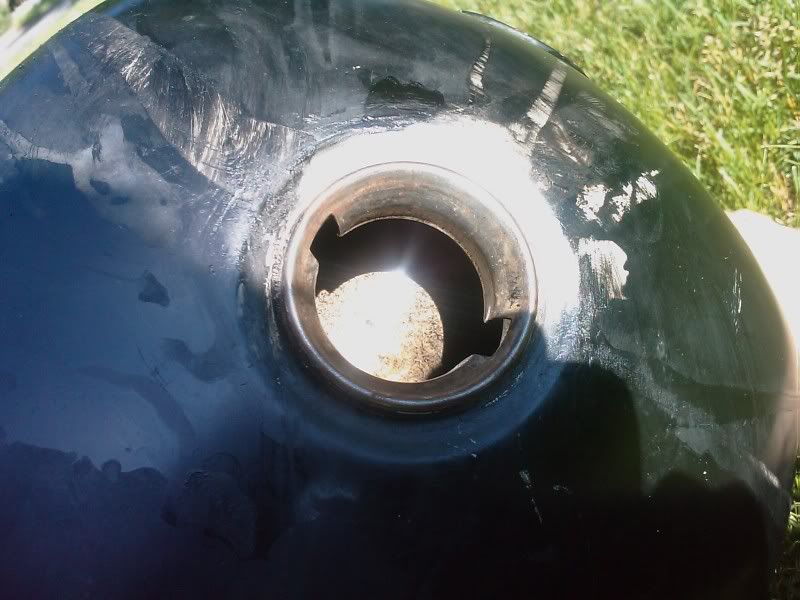
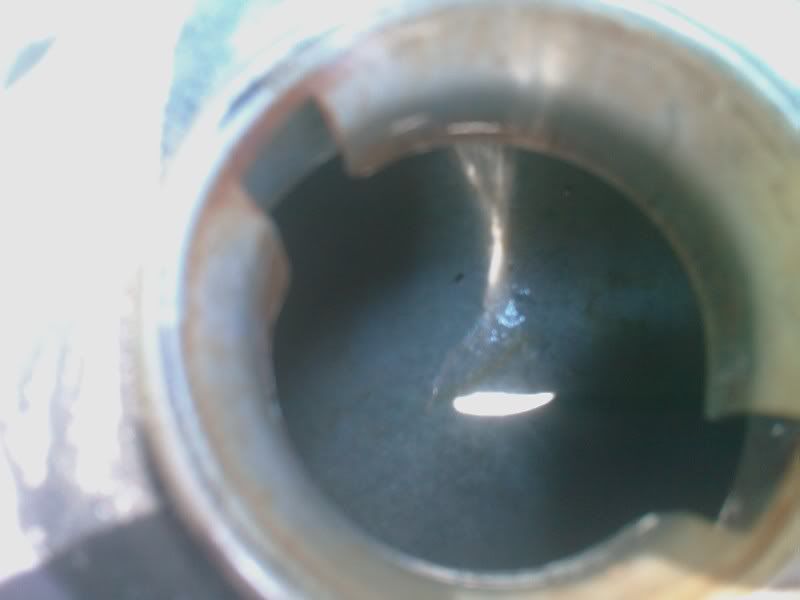
This is a midway shot of the inside of the tank, not too shabby if you ask me. you can see some of the paint came off from my acetone rinse, good thing i plan on painting anyways!
IMAGE_033.jpg

my sacrificial node went to node heaven, i made another
IMAGE_042.jpg


So now its sitting over night with a fresh node and hopefully by tomorrow ill have a clean tank!

I will then flush it with acetone and let it dry, then fill it with gasoline to prevent further corrosion. Then its on to repainting!
 
That will clean the area around the filler neck just fine.
To get the bottom and the rear part of the tank, where all the real rust is, you need an anode that reaches way back there.

Thicker more rigid steel rods work well, they can be bent so they reach the back without touching anything else.

You will need something that will hold it rigidly in the filler hole, so it can't flop around.

I like to put an anode in the other way, through the petcock opening. Bend it so it runs along the side of the tank forward, down low. That gets it really clean where it counts the most, where the fuel comes out. Then I bend another to go over the hump to the other side, if there is a fuel sender opening, I do one from there too.

It takes a while, but once it is done in all of these areas, the entire tank is spotless.
 
That will clean the area around the filler neck just fine.
To get the bottom and the rear part of the tank, where all the real rust is, you need an anode that reaches way back there.

Thicker more rigid steel rods work well, they can be bent so they reach the back without touching anything else.

You will need something that will hold it rigidly in the filler hole, so it can't flop around.

I like to put an anode in the other way, through the petcock opening. Bend it so it runs along the side of the tank forward, down low. That gets it really clean where it counts the most, where the fuel comes out. Then I bend another to go over the hump to the other side, if there is a fuel sender opening, I do one from there too.

It takes a while, but once it is done in all of these areas, the entire tank is spotless.

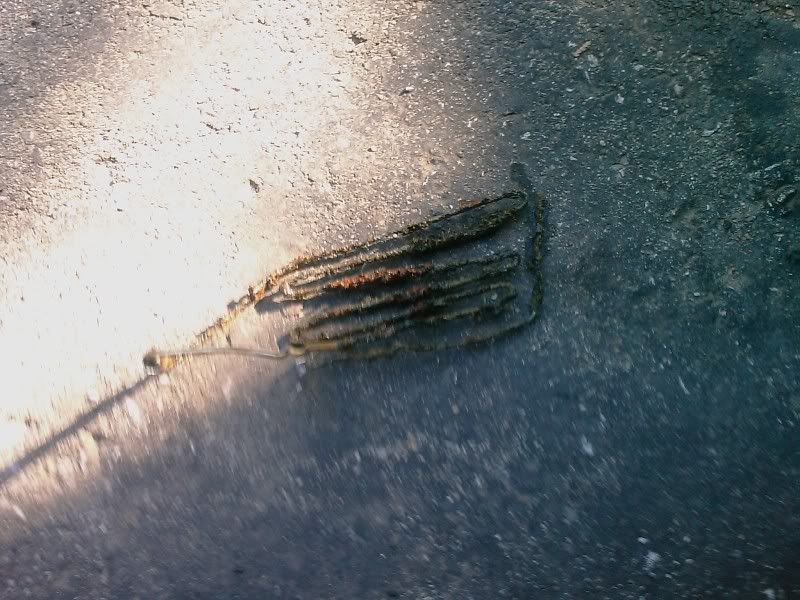
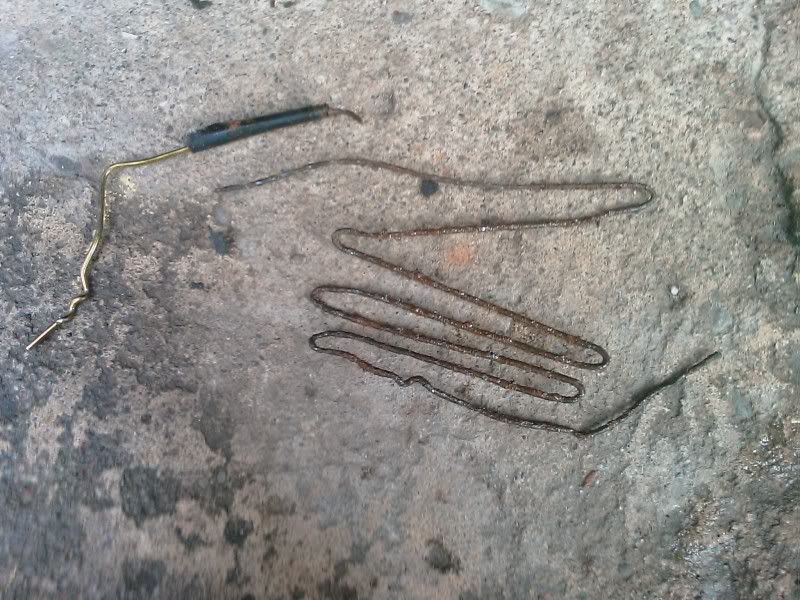
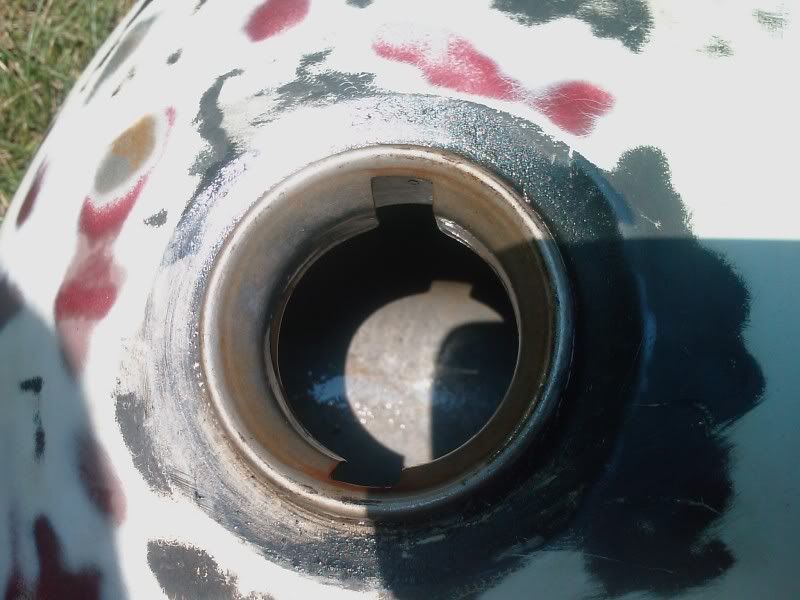
That metal bar was only my first method, I later switched to a folded hanger that went all the way into the tank, that is what those corroded things are in pictures 3 and 5.

Here is another one that shows my second setup.
IMAGE_037.jpg
 
First off, in defense of not using the search method. Between not using the same spelling and not using the same terms to define meaning, searching can sometimes be frustrating.

Anyway back to the topic; I recently used this process to derust a tank. For my anode, I covered the end with tape so that I could really jam it in there without wrorying about it touching the sides. Also, when you finish, make sure you coat it ASAP, it will begin rusting again immediately. I was a little disconcerted when I saw how fast it came back.
 
Can anyone think of a good reason why the inside of the tank cant be galvanized???

wouldn't it would be a simple matter of reversing the polarity and switching the anode for zinc?
 
Update!

I confess, after using electrolysis to remove a tonne of rust, I found that the inside was still coated in black stuff, so i soaked the tank in vinegar for a while. After the vinegar I rinsed with water then gasoline, then coated the inside with a healthy amount of WD-40.

IMAGE_055.jpg

A little more clear:

IMAGE_056.jpg


Never mind the paintjob... Im in the middle of removing the previous owners handywork.
 
So the vinegar removed the black stuff?
Good to know, thanks!

Vinegar is the way to go - ?0.12 a half litre in Asda (our Walmart) 'value' stuff does the trick (so it's real cheap to do). Leave it in for a day or two depending on how bad the rust is and then blast it out with a garden hose - just leave it running in there for about half an hour. Sit back with a beer and watch all the crud come out.

Finish off by adding some detergent and more rinsing. Make sure the tank remains full with the ever more diluted vinegar at all times. Pour the water out but before it dries whack in loads of WD 40 and swill it around or else it will rust before your eyes (you need to be very quick if it's a warm day). Leave the WD 40 to dry naturally - it won't taint the fuel later.

Don't mess trying to save the vinegar - if you've emptied too soon just buy some more - speed is of the essence to stop the flash rusting.

I always take off the tap / fuel sender (if there is one) and make up plastic seals as the vinegar could start to eat them.

Save a few teaspoons of (unused) vinegar to put on your chips to celebrate.
 
Back
Top