• Required reading for all forum users!!!

    Welcome!
    Register to access the full functionality of the GSResources forum. Until you register and activate your account you will not have full forum access, nor will you be able to post or reply to messages.

    A note to new registrants...
    All new forum registrations must be activated via email before you have full access to the forum.

    A Special Note about Email accounts!
    DO NOT SIGN UP USING hotmail, outlook, gmx, sbcglobal, att, bellsouth or email.com. They delete our forum signup emails.

    A note to old forum members...
    I receive numerous requests from people who can no longer log in because their accounts were deleted. As mentioned in the forum FAQ, user accounts are deleted if you haven't logged in for the past 6 months. If you can't log in, then create a new forum account. If you don't get an error message, then check your email account for an activation message. If you get a message stating that the email address is already in use, then your account still exists so follow the instructions in the forum FAQ for resetting your password.

    Have you forgotten your password or have a new email address? Then read the forum FAQ for details on how to reset it.

    Any email requests for "can't log in anymore" problems or "lost my password" problems will be deleted. Read the forum FAQ and follow the instructions there - that's what we have one for...

  • Returning Visitors

    If you are a returning visitor who never received your confirmation email, then odds are your email provider is blockinig emails from our server. The only thing that can be done to get around this is you will have to try creating another forum account using an email address from another domain.

    If you are a returning visitor to the forum and can't log in using your old forum name and password but used to be able to then chances are your account is deleted. Purges of the databases are done regularly. You will have to create a new forum account and you should be all set.

Anti-dive block off plate?

Nessism

Forum LongTimer
Super Site Supporter
Past Site Supporter
TGSR Superstar
I'm bringing an '83 750 back to life and want to ditch the anti-dive. Don’t want to just plug the banjo going to the anti-dive unit on the fork, want to remove it.

In studying the fluid flow though the fork and anti-dive unit it seems that fork oil flows between two holes on the bottom of the fork; out one hole, through the anti-dive unit, and back in through the other hole. When the brake is applied, a plunger actuates restricting oil flow between the holes – thus the anti-dive effect of increasing compression damping in the fork.

I’ve read in the archives about people replacing the anti-dive unit with a block off plate but won’t this cause the forks to act like there is anti-dive applied all the time? Found another thread where it was suggested that any block off plate needs a passage to allow fluid to flow freely between the two holes.

Anyone have any wisdom to share about this? I already fabricated block off plates and have installed them – haven’t ridden the bike yet though. Damping does not seem abnormal when pushing on the forks off the bike.
After further review, I’m leaning toward adding a passage between holes in the block off plate.

Anybody have some wisdom to share on this subject?
 
Last edited:
I put block off plates on all the forks I need to for drag racing & have done it on several street bikes also with no handling issues. Go ride it BEFORE you modify the plates & if you don't like the feel then mill a groove in them to connect the holes. To put an effective groove in the plates you will need the plates to be at LEAST 1/4 inch thick. Ray.
 
While I personally have not done this either, on more than one occasion I've been told that because the anti dive really doesn't work that well, using a solid flat plate to cover it up will do very little to the overall handling.

Just take it easy when you ride it the first couple of times.
 
I can't say I understand the need to block off the unit when loosing the brake lines does all that is needed. Just fill the forks to the correct level with fork oil and add progressive springs. I did just that and my 1100ed is SO much better to ride now. Just my 2 cents.

Josh
 
I may still have a set of plates I made up around here somewhere. I used aluminum plate and created two for each fork leg. One set had slots connecting the two ports and the other set were solid and fit over the slotted pair on each leg. I found just using a solid set stiffened the fork up too much. A set of Progressive springs and allowing the fork oil to always flow between the two ports gave good results.
 
I may still have a set of plates I made up around here somewhere. I used aluminum plate and created two for each fork leg. One set had slots connecting the two ports and the other set were solid and fit over the slotted pair on each leg. I found just using a solid set stiffened the fork up too much. A set of Progressive springs and allowing the fork oil to always flow between the two ports gave good results.

Good info Billy. :D

When you made the plates how thick were they and how deep was the interconnect channel? The plates I made are 1/4" thick but not sure that is thick enough to support a suitably deep channel.
 
But, I think is easier to leave the stock anti dive units that allows the free flow of fork fluid and provide stock look to the bike, or I am missing something??

About the brakes, some people here said to remove the brake hose from anti dive plunger provides better braking, in my case, I have the stock brakes layout and have excellent front brakes. Its a hard time to bleed it but that's the price to keep the bike stock and complete.

Regarding the progressives, I already has a set to be installed, but, the question is: Is really a good improvement (over progressives) to install Racetech emulators??

Also, (I know) which is the correct way to fill the forks with air and the correct pressure??

I want to use this opportunity to say you all congratulations for this excellent site and to have the contribution of all those great and experienced GS'rs.

jacora
 
Good info Billy. :D

When you made the plates how thick were they and how deep was the interconnect channel? The plates I made are 1/4" thick but not sure that is thick enough to support a suitably deep channel.
Total thickness of the two pieces for each leg is only about 1/8" thick. I just used some bronze tone aluminum window channel I picked up off of a construction job I was working on. The channel I cut was only about 1/4" wide and due to the thickness of the aluminum only about 1/16" deep, it flowed well enough to give the fork good action. I'll see if I still have them lying around and post a photo.
 
http://i12.photobucket.com/albums/a243/GS750ED/P1010107.jpg?t=1227200715


I ran block off plates for 20 yrs on my '83 750ED model. Plates were app 1/4 in thick and non groved. You would be surprised how heavy the stock units are - removing them cannot hurt. I would even argue that any loss of unsprung weight - even on a pig like the old GS - is a positive thing.

I had no handling issues and the bike was ridden very hard on the street.

Good Luck, Ed
 
Last edited:
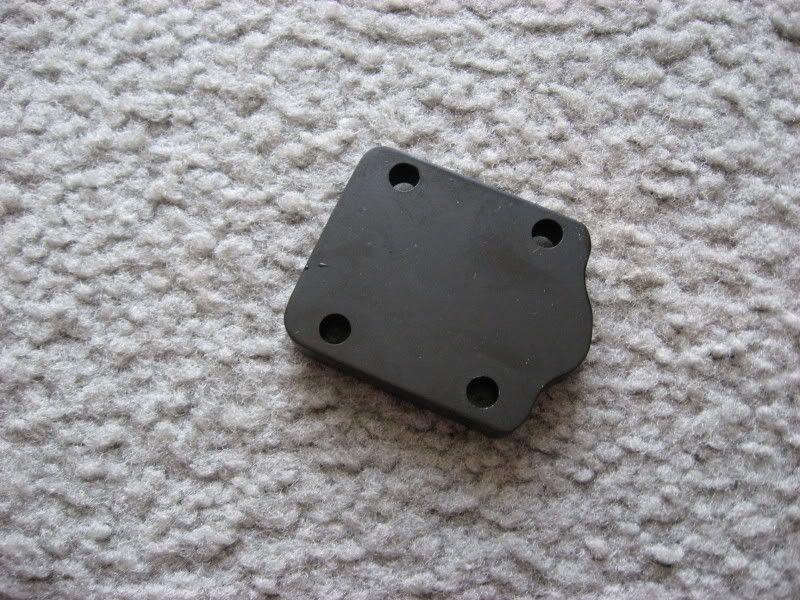
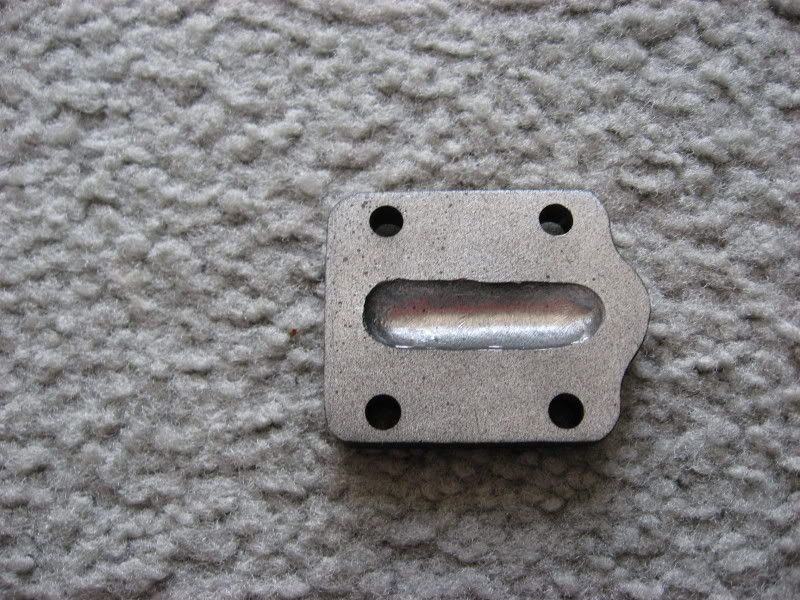
Made a second set of block-off plates. Used 3/8" plate this time and added a groove.

Suspension compliance in terms of compression damping is significantly different between the grooved and non-grooved block off plate; the grooved plate is much smoother, huge difference. With the flat plate the forks seemed very stiff in compression but with the grooved plate the forks compress nice and smooth. Need to try them on the road next...

anti-dive001.jpg

anti-dive002.jpg
 
Last edited:
Made a second set of block-off plates. Used 3/8" plate this time and added a groove.

Suspension compliance in terms of compression damping is significantly different between the grooved and non-grooved block off plate; the grooved plate is much smoother, huge difference. With the flat plate the forks seemed very stiff in compression but with the grooved plate the forks compress nice and smooth. Need to try them on the road next...

Nessism, What diameter groove did you use? Assuming there is a difference between the grooved and the non-grooved plates, I would think using grooves smaller than what you have done would offer a compression rate somewhere between what you describe. If so, we'd basically have an adjustable dampening system, right? So, who can rig up something where we just turn a knob on these blockoff plates allowing us to manually control the compression rate ourselves?
 
Nessism, What diameter groove did you use? Assuming there is a difference between the grooved and the non-grooved plates, I would think using grooves smaller than what you have done would offer a compression rate somewhere between what you describe. If so, we'd basically have an adjustable dampening system, right? So, who can rig up something where we just turn a knob on these blockoff plates allowing us to manually control the compression rate ourselves?


Dardoonk,

I'm not sure how the damping mechanism inside the forks works.:-k Was assuming the oil flowed though some orifice(s) inside the fork to control the damping and the anti-dive just diverted the oil away from the normal damping circuit. Could be wrong of course. Do you think the forks are designed with a planned amount of oil restriction through the anti-dive circuit, even when the brakes are not applied? Honestly, not sure. Going to study the manual to see if I can figure something out.

I do know that the forks seem smooth now. Pumping on them with my hands shows that there is damping action, both in compression and rebound. Don't have another fork that's off the bike to compare to though.
 
I'm not sure either. I've never dis-assembled and anti-dive unit to figure out how it exactly worked. When I had mine apart, I soaked them Seafoam & sprayed cleaner thru them to get all the gunk out. When I did that, I remember spraying in one hole and fluid came out the other; therefore my assumption was that when applying the brakes, the fluid pressure from the line reduced or cut off the flow between the two holes we keep blocking off. If that IS the way the unit is designed, there may be some validity to my idea of making something adjustable.

After I posted last night, I thought about this some more and decided it could be easier to convert the entire anti-dive unit to something manually adjustable.

My reasoning behind this is either ignorance or simple, I don't know which. Suzuki probably has a good idea that never earned it's merit due to one simple design flaw - it takes more pressure to make the anti-dive unit work than it does to stop our bike under normal conditions. IE: more restriction in the unit is required than our brake system can generate while safely stopping us.

If brake pressure in the dive unit presses a check valve, or something similar, which in turn cuts flow between the holes in the forks. Maybe taking control of the dive unit mechanically would give the same benefit as the plates, but still offer some adjustability to control compression.

Well, before I could finish writing this, I did a search and came up with the following from a 1982 Review on Katana Central:
Katana's anti-dive forks are supposed to stop front-end dip with its attendant lightening of rear end and reduction in tyre traction during braking. In fact the droop snoot dipped and bobbed noticeably but that didn't mean the system wasn't working. Suzuki's anti-dive is another of those features which started out on works GP racers and ended up on street bikes. A pipe runs from the front brake calipers to the anti-dive mechanisms on each fork slider. When the brakes are applied, brake fluid pressure closes a valve in the mechanism, restricting the flow of damping oil and slowing fork compression. The valves are spring loaded so if the wheel hits a bump when the brakes are on, they bounce off their seats and restore the flow of oil for a moment to allow the suspension to absorb the shock.
As far as dipping of the bars and steering head during braking is concerned, anti-dive is a bit of a misnomer because the point of the system is not to eliminate dive but to make it more controllable. Instead of a front end which zonks to the limit of its travel under heavy breaking a la BMW or Yamaha XJ650, you have a system which slows the process down, making for better, safer braking. Of course, braking to a standstill over a series of bumps will eventually use up all the fork travel but throughout the test the Katana refused to show any bad behaviour during braking, nor could the anti-dive system be accused of robbing the front stoppers of sensitivity.
The entire article is here: http://www.katanacentral.co.uk/reallife/reviews/bike/jan82/p18_gsx1100s.asp

So it looks like I am partly right, but haven't accounted for the spring to release the pressure. But, then again, maybe the spring is the problem?

If anyone has any pics of a dis-assembled anti-dive unit, I'd like to see them.

I'd like to take a couple apart to see how they work, but have no extras. If anyone has a couple of them that can be donated into research, let me know.
 
Now with your 3/8 plate. Or a thicker one, thread a hole and install an adjustment screw so you can vary the passage size. Basically a controlled restriction.
It would be a simple form of making the fork adjustable.
 
How's the rebound? I am assuming that these plates don't affect rebound damping only compression. Using a different size of passage or being able to adjust it with a screw would basically give you adjustable compression damping, that's pretty sophisticated for a 25 year old bike!
It would actually be a good thing as obviously with adjustable compression damping you can do stuff you can't do with the springs (as compression damping affects the hard "spikes" in movement more than the soft slower stuff).

Dan :)

Dan :)
 
Bike is back together so was able to test the forks (in the garage only though); they feel the same as any other GS forks I've owned. I'm starting to think the damping may have a convoluted routing passage but with the passage open (large groove in the plate), it's just a regular fork. Constricting down the passage in the plates would increase the damping too much I think.
 
Every fork should have two lots of damping.
1. Compression
2. Rebound

On a set of forks as basic as the GS it would be strange if the 2 circuits were separate but that's not to say that they aren't or that the plates would affect one element more than the other.

With the block off plates fitted are the forks much slower to rise as well as being harder to compress or just harder to compress?

If it's the first then that's ok, you could be able to adjust both using a bolt or something in the passage.

In their intended usage the fact that the anti dive units affected rebound wouldn't matter unless you were going over a repetitive set of bumps with the brakes applied. It's an interesting thought....

Dan :)
 
Back
Top