• Required reading for all forum users!!!

    Welcome!
    Register to access the full functionality of the GSResources forum. Until you register and activate your account you will not have full forum access, nor will you be able to post or reply to messages.

    A note to new registrants...
    All new forum registrations must be activated via email before you have full access to the forum.

    A Special Note about Email accounts!
    DO NOT SIGN UP USING hotmail, outlook, gmx, sbcglobal, att, bellsouth or email.com. They delete our forum signup emails.

    A note to old forum members...
    I receive numerous requests from people who can no longer log in because their accounts were deleted. As mentioned in the forum FAQ, user accounts are deleted if you haven't logged in for the past 6 months. If you can't log in, then create a new forum account. If you don't get an error message, then check your email account for an activation message. If you get a message stating that the email address is already in use, then your account still exists so follow the instructions in the forum FAQ for resetting your password.

    Have you forgotten your password or have a new email address? Then read the forum FAQ for details on how to reset it.

    Any email requests for "can't log in anymore" problems or "lost my password" problems will be deleted. Read the forum FAQ and follow the instructions there - that's what we have one for...

  • Returning Visitors

    If you are a returning visitor who never received your confirmation email, then odds are your email provider is blockinig emails from our server. The only thing that can be done to get around this is you will have to try creating another forum account using an email address from another domain.

    If you are a returning visitor to the forum and can't log in using your old forum name and password but used to be able to then chances are your account is deleted. Purges of the databases are done regularly. You will have to create a new forum account and you should be all set.

desperate on a stuck screw

  • Thread starter Thread starter JCSkokos
  • Start date Start date
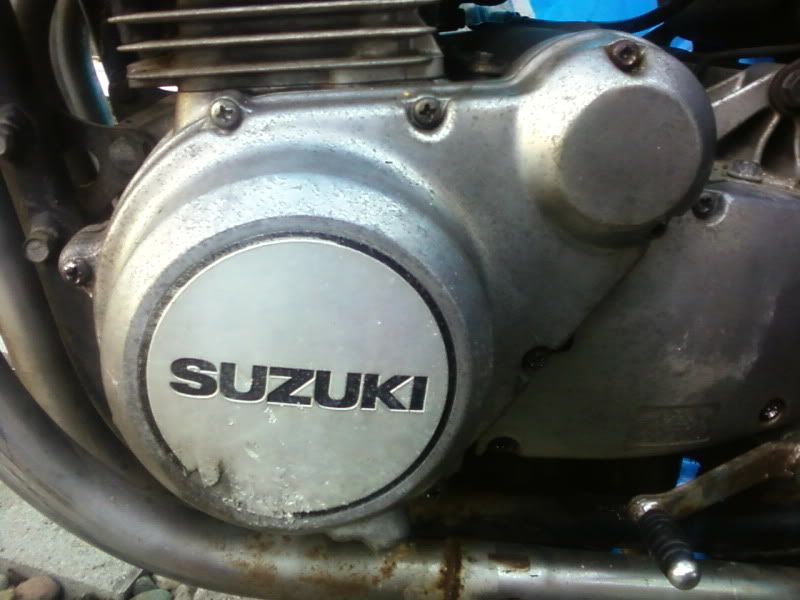
the strange part though is I was able to muscle out all those rusted bolts on the intake boots...
on this one its the top two by the starter
Photo-0185.jpg


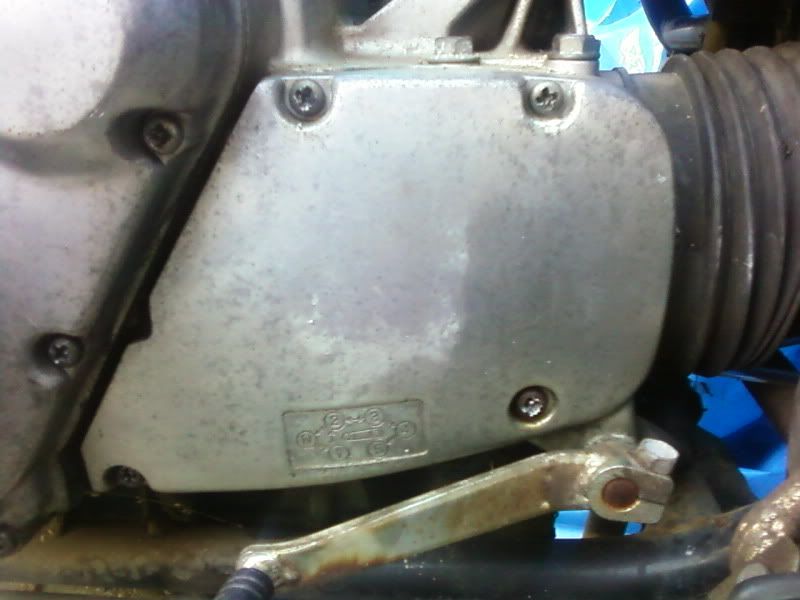
and this one its the bottom right
Photo-0186.jpg


as you might be able to tell, they are pretty beat to ****
 
the strange part though is I was able to muscle out all those rusted bolts on the intake boots...
on this one its the top two by the starter
Photo-0185.jpg


and this one its the bottom right
Photo-0186.jpg


as you might be able to tell, they are pretty beat to ****

Harbor freight also have some left handed drill bits, center drill the screws so the heads fall off. Then you can use vice grips on the shank after the cover comes off.

I think you areusing the wrong scrw head, also I always (lightly) hammer the driver head into the screw to insure it is seated. Push hard you should not be stripping that many.
 
I have a couple of those bits, Im just not sure if I am using them right because it they do absolutely nothing that i can see
 
You could drill the head clean off and the screws will most likely drop out. The head is usually the problem, it galvanized to the case.
 
alright, that makes sense too. I am going to try to borrow a dremel from my school's auto shop and try the flat-head approach first, then if that fails Ill try just drilling the heads off. Until I get the gaskets/gasket material I just want to get them out to put my new stainless ones in.
 
alright, that makes sense too. I am going to try to borrow a dremel from my school's auto shop and try the flat-head approach first, then if that fails Ill try just drilling the heads off. Until I get the gaskets/gasket material I just want to get them out to put my new stainless ones in.

You can use either direction drill bit, getting a dremil cutting disk down into some of those holes is going to likely cut the cover. Just drilling the heads will be less likely to damage the cover.

Just figured no reason to drive it =in any further, but probably doesnt make much difference.

Put some masking/duct tape around the hole and just drill them out. Start with a small one and then move to a bigger one almost the size of the head.
 
I had a similar issue with one of them on mine. If you get a dremel cutting head and go real easy you might just be lucky enough to get a little cut in there. Don't try to take off more than the wheel will fit into. If that means you get an older wheel that has worn down some then try that. Then take your chisel and start working around. If you are real careful you'll make it.

Otherwise, try Posplayer's suggestion as he's a lot smarter on this stuff than I am.
 
I had a similar issue with one of them on mine. If you get a dremel cutting head and go real easy you might just be lucky enough to get a little cut in there. Don't try to take off more than the wheel will fit into. If that means you get an older wheel that has worn down some then try that. Then take your chisel and start working around. If you are real careful you'll make it.

Otherwise, try Posplayer's suggestion as he's a lot smarter on this stuff than I am.

Those screws are not hardened so it will take longer to find a drill and bit then to drill off a screw head.
 
Since this is in the Tips and Tricks section, I just wanted to share my experiences with stuck screws to help others out if possible.

For the intake boot screws and case/sprocket covers, an impact screwdriver (from HarborFreight, of course) worked well for me even on really buggered up screw heads. A tip for those new to them is to make sure you are using the handle/grip to apply downward turning pressure before whacking it with the hammer. This way, you already have the screw driver head seated firmly in the screw head and are helping to apply force in the direction of extraction which in turn removes any slack/slop from the impact driver mechanism and insures all force from the impact is applied directly to the screw in a smooth motion.

Another problem I've heard why those screws tend to get so messed up in the first place is that they aren't really a #2 or #3 but something different from most screwdrivers in common use today.

But, moving on to the real gist of my post: fully broken bolt heads!

I had this happen to me while I was replacing all my ugly rusted exhaust manifold bolts with shiny new SS hex socket head bolts. My problem was also made more difficult because of the frame tube next to the bolt. Full clearance could be only be achieved by taking the engine off the frame.

So, I tried a few things I already knew to do: apply penetrating lube, whack with hammer/blunt punch, apply more lube, wait a few days applying additional lube periodically. Then I tried to spin it out with vise grips but no luck.

Then I cut a slot in the top and tried to get it out with an impact screwdriver. No luck there either.

OK, then a bit of research and a few more ideas:

I tried extreme heat with a propane torch and extreme cold with an inverted can of compressed air (like for cleaning computers) but no such luck.

Then I tried a bolt extractor/ez out. Not a basic fluted spiral one but a fancy one that claims to not break off inside the stuck bolt called something like Drill-Out. No luck there either. I broke it, but at least true to advertising it didn't break off inside the bolt.

Finally I resorted to one of my ideas that I had originally dismissed as too fraught with danger. I didn't want to damage the head and/or resort to a heli-coil type repair so I tried all the above methods first. Some had suggested drilling out the bolt with larger and larger drill bits but you have to be pretty much perfectly centered with your bolt to not end up destroying the original hole.

So, I went to the tool I find to be indispensable time and time again: my Dremel tool. I used it (with a flex shaft to really get in close, centered, and with maximum control) to first drill a hole all the way through the bottom of the bolt. Then, I used a small cylindrical grinding bit similar to this to start grinding the bolt away from the center out. As I got close to the outside of the bolt and near the tops of the aluminum head threads I was able to use a pick to pull out the steel threads from the bolt. Sometimes, I could pull out a full turn or two at a time. When I started to get near the middle of the bolt, I noticed that a few turns of threads weren't coming loose from the grooves no matter how hard I picked at them. These were the whole reason the bolt wouldn't come out with other methods: the steel threads had fused themselves to the aluminum head in a bond as strong as a weld. This wasn't a case of simple corrosion seizing.

To get past this, I kept grinding down through the bolt until the back 1/3 of the bolt came loose from the fused threads and I was able to screw that part all the way to the bottom of the hole with a screwdriver jammed in there. Then, I picked up a metric tap and die set (from Harbor Freight, once again) and proceeded to tap the hole out following the existing threads. This had the dual effect of smoothing/straightening any threads I had buggered up along the way by grinding as well as cutting out the fused-in steel. Once I did that I was able to back out the bolt portion in the bottom of the hole with the jammed in screwdriver quite easily and the hole was just as good as new.

So, in hindsight, I could have saved a lot of time and stress by going first to the Dremel tool, but hey, look what I learned along the way! :rolleyes:

I hope this is helpful to others.
 
Ammonia. Common household ammonia, if you can get it down into the threads, will attack the aluminum, thereby eating it away just enough to let the screw go.
This has worked on aluminum seatposts stuck into steel bicycle frames many times over. Same principle, right?
 
Good thread. I've already used the slot-cutting trick to remove a few screws. My current problem is a stuck air screw. It acts like galled threads, easy to turn at the bottom but harder and then stops a few turns out. It's soaking in PB Blaster now and I'll try some heat later. Are there any other tips or tricks for removing this screw?

Here's a picture of it from John Bloemer Pictorial:
 
Good thread. I've already used the slot-cutting trick to remove a few screws. My current problem is a stuck air screw. It acts like galled threads, easy to turn at the bottom but harder and then stops a few turns out. It's soaking in PB Blaster now and I'll try some heat later. Are there any other tips or tricks for removing this screw?
OK I was able to remove the screw after a lot of "forward and back" motion. The threads on the screw look good. Does anyone know the thread size in case I need to chase the carb threads with a tap?
 
It's M6 x 0.5 (fine) i believe if we are talking about the same air screw ( its actually an idle mixture adjustment screw). Try McMaster-Carr (mcmaster.com) or J&L (jlindustrial.com). Other places online probably have it too just do a google search.
 
Last edited:
Go to either Ace Hardware/True Value and get what you need. You'll be surprised on how well you make out there.
 
Thanks very much. I'm headed to Harbor Freight for a Dremel-type (I see now why they are so valuable) and some other stuff. Maybe one of their tap-and-die sets has that size. If not, I'll try Ace.
 
Much like Kcorbin's post below, I wanted to share my resolution to the same situation

I want to stress that I know allot of people that don't understand the idea of "Caressing" the bolt out, instead of trying your luck.

In My situation I had worked from cylinder 1 to cylinder 4. After removing the first bolt, I knew right away that the bolts had most likely never been replaced. bike currently at 27K. I took my time and work each one out successfully up until cylinder 4 Top bolt. The bolt sits snug beside the frame and between the Exhaust pipe. I was able to accomplish movement and thought I was safe when around 1/2 way out without warning just sheared off. I felt that because I had gained movement I could probably extract it with my left hand drill bits. but of coarse because of the frame being so close there was no way to get the drill anyway near there. So I did have to make a trip out to my favorite store Farm and Fleet and purchased a 5/16 about 18" drill bit that I could successfully drill a pilot hole. before drilling I always start with the center punch, then followed by the new bit. at this point with the pilot started I felt more comfortable to use my drill bit extension, (meant for Philips type bits not drill bits) (couldn't find one for Drill bits and not sure if they exist). though intended for the octagon style bit I was able to secure the drill bit in the end with the 2 provided set screws. After trying an extractor and failing I continued to drill out the bolt one size at a time until I saw the threads start to appear. I thought I might be able to then pull out little bits at a time but was unsuccessful. I then hoped for the best as I used my tap to carefully align with the fist couple threads. now because the engine is still in the frame, I came up with an extension concoction. that I was semi proud of. I don't know if it was just my luck but the square drive on the tap was actually vary close to the square drive for a 1/4 ratchet. so i used a 8" 1/4 drive extension with the Tap tool clamped to the end (where the socket normally goes). at times I couldn't get a strait on shot to every cylinder so I put a 1/4 swivel between the extension and Tap. the method work relay well except for a few small abrasions against the frame.

Just sharing my experiences. hope this helps

Thanks for all the knowledge on the site
 
On those recessed side cover screws that have been previously molested, I simply take my impact driver and put in a wide FLAT bit. then while pressing it straight and centered onto the screw head, I whack it 4 or 5 times keepink it relocated in the same spot each hit. That usually makes a very nice slot in the already bad head. If It looks like it needs more of a slot, I hit it in a few more times. Then while pressing in and turning the driver CCW, I hit it sharply and it almost always comes right out.

On other screws, I also take a sharp needle punch and punch a deep "DOT" into the head anywhere I can get it as far to the outside as possible still in the meat of the head.... then take the same punch and turn it so the force will unscrew that bolt and hit it hard. NEVER FAILS.
 
Take out the battery and the air box and add some extentions to the driver and go in thru the frame..plenty of swing room for a hammer out there. And ever wonder why they made it a 3/8 removable head?? Thats right...so you can have a socket impact as well!!!
 
Last edited:
Soak that dang thing with PB blaster for a few days. Get 2 good chisels. One sharp, one dull head. Knock a notch with the sharpy and then use the big head one to tap it around. Has worked everytime for me. Takes flippin forever, but it will work.:cool:

Haven't had this method fail me yet.
 
I think thats a #2 phillips tip....Whatever, its a good idea. Next time youre at the tool store buy a dedicated apex bit socket. Its magnetic so the bit dont fall out.

The ratchet is great until you run into a tight spot. Thats when I grab an air ratchet.

If the phillips screw head is F'ed up grab a dremel and cut a straight slot in it. Then use a straight apex bit.
I have used this method many times over .
 
Back
Top