• Required reading for all forum users!!!

    Welcome!
    Register to access the full functionality of the GSResources forum. Until you register and activate your account you will not have full forum access, nor will you be able to post or reply to messages.

    A note to new registrants...
    All new forum registrations must be activated via email before you have full access to the forum.

    A Special Note about Email accounts!
    DO NOT SIGN UP USING hotmail, outlook, gmx, sbcglobal, att, bellsouth or email.com. They delete our forum signup emails.

    A note to old forum members...
    I receive numerous requests from people who can no longer log in because their accounts were deleted. As mentioned in the forum FAQ, user accounts are deleted if you haven't logged in for the past 6 months. If you can't log in, then create a new forum account. If you don't get an error message, then check your email account for an activation message. If you get a message stating that the email address is already in use, then your account still exists so follow the instructions in the forum FAQ for resetting your password.

    Have you forgotten your password or have a new email address? Then read the forum FAQ for details on how to reset it.

    Any email requests for "can't log in anymore" problems or "lost my password" problems will be deleted. Read the forum FAQ and follow the instructions there - that's what we have one for...

  • Returning Visitors

    If you are a returning visitor who never received your confirmation email, then odds are your email provider is blockinig emails from our server. The only thing that can be done to get around this is you will have to try creating another forum account using an email address from another domain.

    If you are a returning visitor to the forum and can't log in using your old forum name and password but used to be able to then chances are your account is deleted. Purges of the databases are done regularly. You will have to create a new forum account and you should be all set.

diy carb balancer - what have i done wrong?

  • Thread starter Thread starter Woodsy
  • Start date Start date
W

Woodsy

Guest
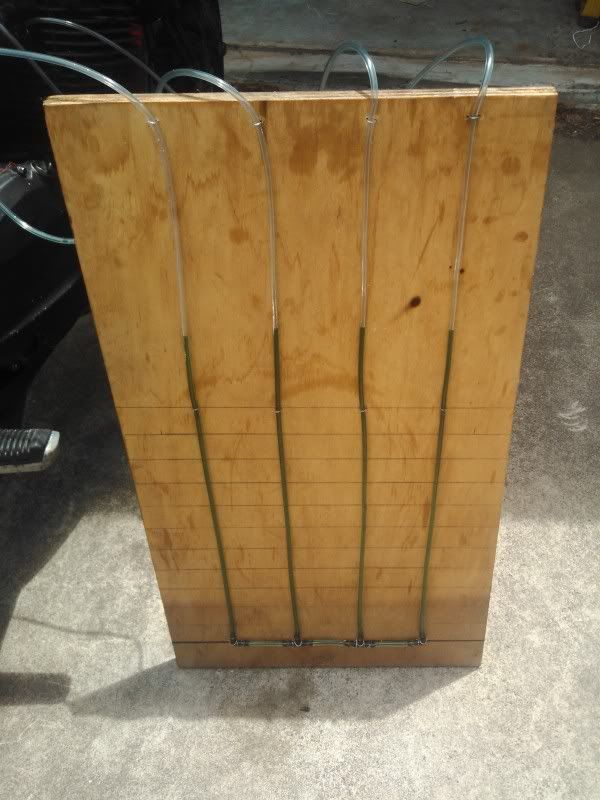
Okay guys, i made this today and hooked it up to my 750 and am having absolutely no luck with it, at one point all the oil ended up in the engine so i pulled the carbs off and bench synced them to get a fresh starting point but am still no where near even getting a result.

Its not pretty but it does work, should i have them both joined in the middle or can i run them as seperate banks without the balancer?
IMG_20130205_122830_zpsef892b5e.jpg
 
i've got small fittings in the lines that restrict the hoses to 3mm. Its getting annoying...
 
I can't tell you what you have done wrong, except for choosing the wrong fluid or the wrong length of tubing or the wrong engineer to design it for you.

There needs to be enough weight in the tube to withstand the pull of the vacuum that you apply to the top.
For columns the length your engineer has chosen, you need to have mercury in them.
If you choose to stay with oil, you will need columns about 25-30 feet high.
That's "high", not "long", as it's the vertical height that gives the weight, not simply length.

By the time you get done playing around and arguing with your engineer, you may find it an outright bargain to buy the Carbtune for AUS$98.71 and be assured that you have a quality unit that works. :o

Oh, the "restrictors" only delay the speed with which the vacuum acts, they do not reduce it.
You will still suck all the oil out of the tube, it will just do it slower and with fewer pulsations.

.
 
the engineer was myself after looking at other setups online, i wasnt sure if it was going to work and seems it isnt.
 
Last edited:
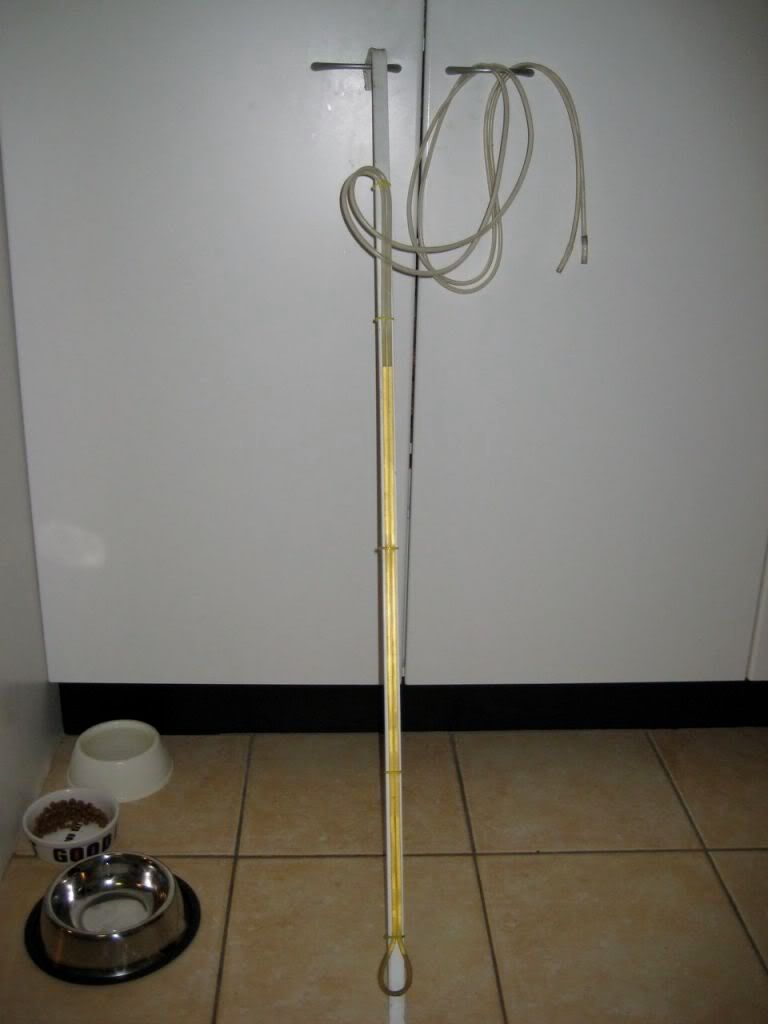
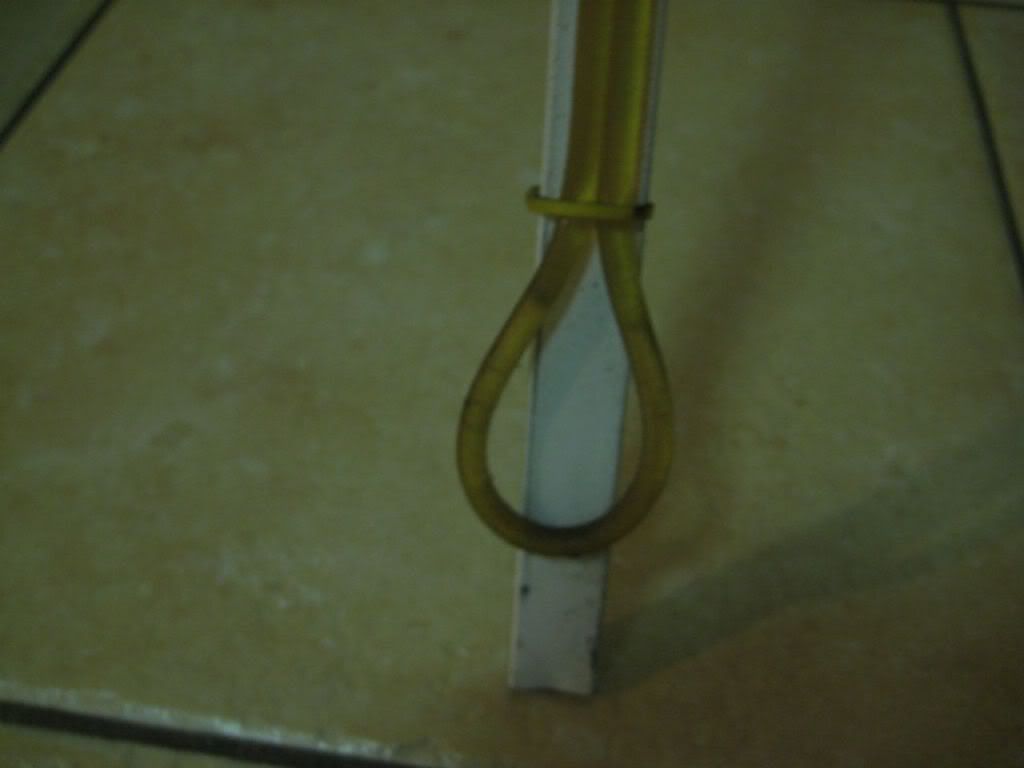
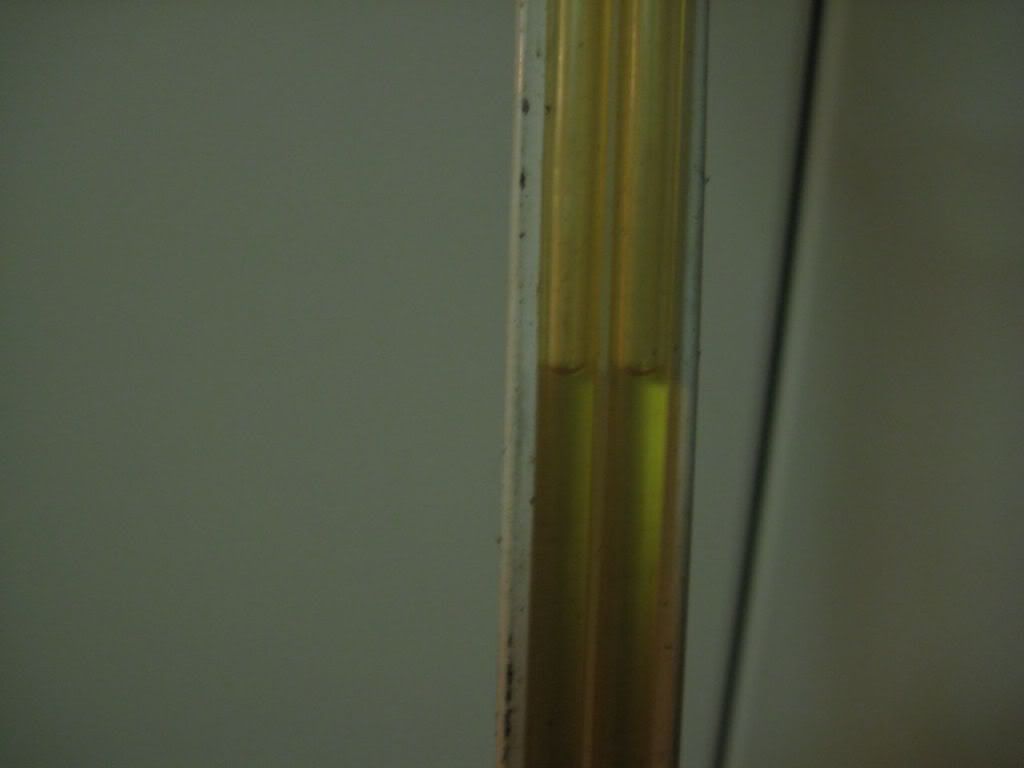
This is mine:

IMG_3689.jpg


IMG_3692.jpg


IMG_3691.jpg


It has fork oil in the tube and the total length of the tube is about 14'.

Works great. On a 4 cyl you have to balance 1 and 2, then 3 and 4, then 2 and 3 to balance the pairs.

The key to these things is to have a decent length of tube and keep it simple so there's no chance of leaks (hence the single length of tube).

And if one of your carbs is sucking the oil into the motor you can pinch the hose until you get it close to balanced.
 
Last edited:
This is mine:
It has fork oil in the tube and the total length of the tube is about 14'.
Works great.
On a twin, yes, it will work "great", but a 4-cylinder bike is a completely different animal when it comes to carb sync.


On a 4 cyl you have to balance 1 and 2, then 3 and 4, then 2 and 3 to balance the pairs.
Sounds good on paper, but when you start to actually balance the carbs, you will see that adjusting any one of the three adjuster screws really affects all four vacuum levels. You can not simply "balance 1 and 2, then 3 and 4, then 2 and 3 to balance the pairs".
And I won't even bother to point out that the factory-recommended sequence is to balance #2 to #3, then match #1 just a bit higher than that pair, and finally to match #4 to #1 while monitoring all four cylinders.
I won't do that because the factory probably doesn't know what they are talking about.


The key to these things is to have a decent length of tube and keep it simple so there's no chance of leaks (hence the single length of tube).
Again, it works GREAT on a TWIN.


all my tubing is 18ft in total, used 2 stroke oil in them
It does not matter how much your total length is, you need to have EVERY COLUMN OF OIL 25-30 feet high to have enough weight to pull against engine vacuum. To have a column 25 feet high, you will also need another 25 + feet to get back down to your bike (unless you dig a deep hole in your garage). Do this for four cylinders, you will need a total of over 200 feet of tubing.

There have been several attempts to home-brew a carb sync tool documented on this forum and others. The ones that say "hey, lookee here, I got a good one" are the guys that have TWINS. A simple balance tube like hillsy's works fine for that, but when you get to a 4-cylinder bike, the rules change completely.

You may choose to continue with your current engineer, but I have said my peace, I'm outta here. :o

.
 
It does not matter how much your total length is, you need to have EVERY COLUMN OF OIL 25-30 feet high to have enough weight to pull against engine vacuum. To have a column 25 feet high, you will also need another 25 + feet to get back down to your bike (unless you dig a deep hole in your garage).

With a vented unit this is true. If it is not vented, the distance does not need to be so great. There does need a way to keep all of the fluid from going into whichever cylinder has the highest vacuum.
Theoretically, it is possible.
Practically, I just bought a Carbtune.

Twins don't need any tool do balance the carbs anyway. You can get them perfect without anything.
 
I saw a video where a guy used snapple bottles as reservoirs instead of just tubes. Still looked pretty finicky, though.
 
it would be easier to just get a carbtune, i just wanted to see if i could get a good DIY one setup but looks like my setup just wont work in its current form.
 
I've used my DIY balancer on quite a few 4 cyl bikes and it works fine the way I've said. I don't really care about how anyone thinks it shouldn't work - I use it and it works.

Obviously, your results may vary.
 
You have way too much oil in your lines and not enough height in your tubes. I think you'll be fine if you change at least the fluid level, or just buy/ borrow a tuner. Out of curiosity I made one like yours with 4 tubes joined with T fittings at the bottom, no restrictors, mounted to 4 foot board, with about 4 inches of ATF in the tubes. The vacuum from my 1150 sucked the fluid about halfway up. I don't know if my motor creates more vacuum than smaller motors but I suppose all you need to do for adjustment is play with the fluid level.
 
I don't like re-inventing the wheel when I don't have too. Carb sync tools are one of those wheels. I just soon buy one and not have the headaches of guessing at it. Sure maybe you might only use it once though I doubt it. You can sync your buddies bikes now for a few bucks and eventually pay for the thing. And guess what...you have it when you need it now.
 
missing a vented resivoir

missing a vented resivoir

fundimentally it appears this tool is missing a vent. I mean we are pulling 5~15 hg thru a tiny tube with fluid in it -- total vacuum?? yes it appears so.

Old honda clymer manuals have a very detailed home made manometer and it uses a canning jar with a vent in the lid and the tubes in the fluid in the vented jar.

the tools I see in this thread are making a total vacuum - instead of a semi passive vacuum meter. hope you don't get mad at me for saying so-- but you guys are DE-tuning --with those tools -- they are no where near accurate..

(approx) atmosphere is 14.7 / sq in - on everything-

at idle - inside your carb is somewhere between 5~15 above that measured in centimeters also gauged by the viscosity of mercury at sea level ....agreed??

here is a question for you: how do you measure the pressure realtionship of each of your cylinders to the atmosphere as well as to each other when a little tube is totally sealed with some 5-10-15-20 weight oil ? .

you think 10 weight oil equalized out in a total vacuum is correct? I'm sorry it is not.


Okay guys, i made this today and hooked it up to my 750 and am having absolutely no luck with it, at one point all the oil ended up in the engine so i pulled the carbs off and bench synced them to get a fresh starting point but am still no where near even getting a result.

Its not pretty but it does work, should i have them both joined in the middle or can i run them as seperate banks without the balancer?
IMG_20130205_122830_zpsef892b5e.jpg
 
The idea behind the DIY manometer is that you are comparing the vaccum of the carbs to each other. You don't need to measure carb vaccum v atmosphere.

The biggest problem with the multiple connected versions is if you have a leak at one of the joins the whole thing becomes useless - and this is why the oil gets sucked into the motor most of the time (along with the carbs being WAY out of sync).

You can argue all you like about why it won't work, but I use mine and it DOES work.

Carry on.
 
synchro voodoo

synchro voodoo

I beg to differ --- mechanical slides can be set to 5Hg 10Hg or 20 Hg -unless there is a stationary base carb (not all have one) - hence the amount of poor running GS's just off idle

C.V. carbs equalize to the atmosphere at a rate depending on the size of the vent in relation to spring pressure inside the carb body restricting the rubber diaphram and slide seperating hi-pressure from low-pressure at any elevation.

sorry to argue the point - actually ,I put more emphasis into making them equal at 3000 rpm and let the idle handle itself , as long as it idle drops properly on all cylinders and you'll get a better cruise

The idea behind the DIY manometer is that you are comparing the vaccum of the carbs to each other. You don't need to measure carb vaccum v atmosphere.
 
Last edited:
Can you explain how you adjust the specific gravity of each individual carb independently in a bank of four?
 
I had a similar looking 4' manometer using atf - though I hung the tubes about 8' up over the rafters in my garage for some extra height. It took a while to sort out, but I managed to balance the carbs at 3000 based on some info read hear - could have been trippivot's; but it don't really remember.
If you have any leaks in your system, it'll give garbage results and/or try to deposit all the oil in your engine no matter how high your tubing is.
I'll have to look further into what trippivot is saying, because i'm not quite sure if it's clicking yet - but is probably right.
My bike ran pretty good before I "synced" the carbs - so no surprise that it ran pretty good after - maybe better, but definitely not worse.
 
Last edited:
The best way to start with one of these is the single hose 2 end one. Very little chance (or should be none) of there being any leaks through dodgy joins. If you have ANY leaks in the system, you'll be sucking oil into a cylinder or two.

Another thing with mine is the main tube is only 3mm ID - I have some larger tubing over the ends to slip over the carb balance ports. Not sure if that makes any difference but I've never had the oil get sucked into a carb (or at least there's been a fair bit of warning and I've shut the motor down). I guess it's a bit like putting restrictors in 6mm tube.

Also, if you "bench sync" your carbs at the start they will be pretty close and shouldn't suck the oil into one of the ports without warning.

But hey - it isn't for everyone.
 
Back
Top