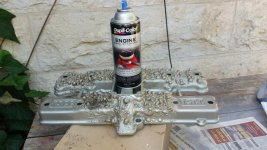
• Required reading for all forum users!!!

    Welcome!
    Register to access the full functionality of the GSResources forum. Until you register and activate your account you will not have full forum access, nor will you be able to post or reply to messages.

    A note to new registrants...
    All new forum registrations must be activated via email before you have full access to the forum.

    A Special Note about Email accounts!
    DO NOT SIGN UP USING hotmail, outlook, gmx, sbcglobal, att, bellsouth or email.com. They delete our forum signup emails.

    A note to old forum members...
    I receive numerous requests from people who can no longer log in because their accounts were deleted. As mentioned in the forum FAQ, user accounts are deleted if you haven't logged in for the past 6 months. If you can't log in, then create a new forum account. If you don't get an error message, then check your email account for an activation message. If you get a message stating that the email address is already in use, then your account still exists so follow the instructions in the forum FAQ for resetting your password.

    Have you forgotten your password or have a new email address? Then read the forum FAQ for details on how to reset it.

    Any email requests for "can't log in anymore" problems or "lost my password" problems will be deleted. Read the forum FAQ and follow the instructions there - that's what we have one for...

  • Returning Visitors

    If you are a returning visitor who never received your confirmation email, then odds are your email provider is blockinig emails from our server. The only thing that can be done to get around this is you will have to try creating another forum account using an email address from another domain.

    If you are a returning visitor to the forum and can't log in using your old forum name and password but used to be able to then chances are your account is deleted. Purges of the databases are done regularly. You will have to create a new forum account and you should be all set.

Dupli-color engine enamel paint

  • Thread starter Thread starter dpascal
  • Start date Start date
D

dpascal

Guest
I painted my engine cover with Dupli-color engine enamel paint. The result looked beautiful.
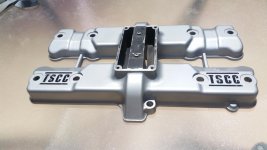
DSC_0872.jpg
 
I then went on to perform this high temp break in procedure:

1. Let the paint dry for 10 hours.
2. Heat the color to 80 degrees Celsius for 30 min.
3. Heat the color to 120 degrees Celsius for 30 min.
4. Heat the color to 160 degrees Celsius for 30 min.
5. Heat the color to 200 degrees Celsius for 30 min.

As seen in the attached picture, the result was a disastrous Smallpox epidemic threatening to consume all man kind.

DSC_0930.jpg

At this point I understood that cool-down periods are needed between temperature increases so I cleaned the head cover down to bare aluminum and executed the following procedure instead:

1. Let the paint dry for 10 hours.
2. Heat the color to 80 degrees Celsius for 30 min.
3. Let the part cool down to room temp.
4. Heat the color to 120 degrees Celsius for 30 min.
5. Let the part cool down to room temp.
6. Heat the color to 160 degrees Celsius for 30 min.
7. Let the part cool down to room temp.
8. Heat the color to 200 degrees Celsius for 30 min.

Up to step 7, everything went fine but after 10 minutes at 200 degrees I started to see very few, but still apparent, tiny bubbles. Not as worse as seen when executing the no-cool-down process but still there.

What am I doing wrong? Is the Dupli-color engine enamel intended to survive 200 degree Celsius?
 
Sounds like your actually boiling the paint to a nuclear level, this break all the bonding agents in the paints chemical make-up. Heating the part gives the paint a chance to actively bond to the part, but if the part is too hot it will repel the paint, hence the spotting where the paint is landing on the part, partially cooling it and trying to bond to the part.
I'd try a low temp heating first on a clean surface, and put the paint into a sauce pan on a tray to get it off the bottom and slowly bring the water to a boil. Remember before you pick it up the can will be hot, so use gloves.
 
200C is most likely beyond the limit for that paint. The engine shouldn't get that hot in use so maybe stop at 160.
 
Dupli-color engine enamel paint vs. PJ1 engine enamel paint

Dupli-color engine enamel paint vs. PJ1 engine enamel paint

Well there is a twist in the plot ....
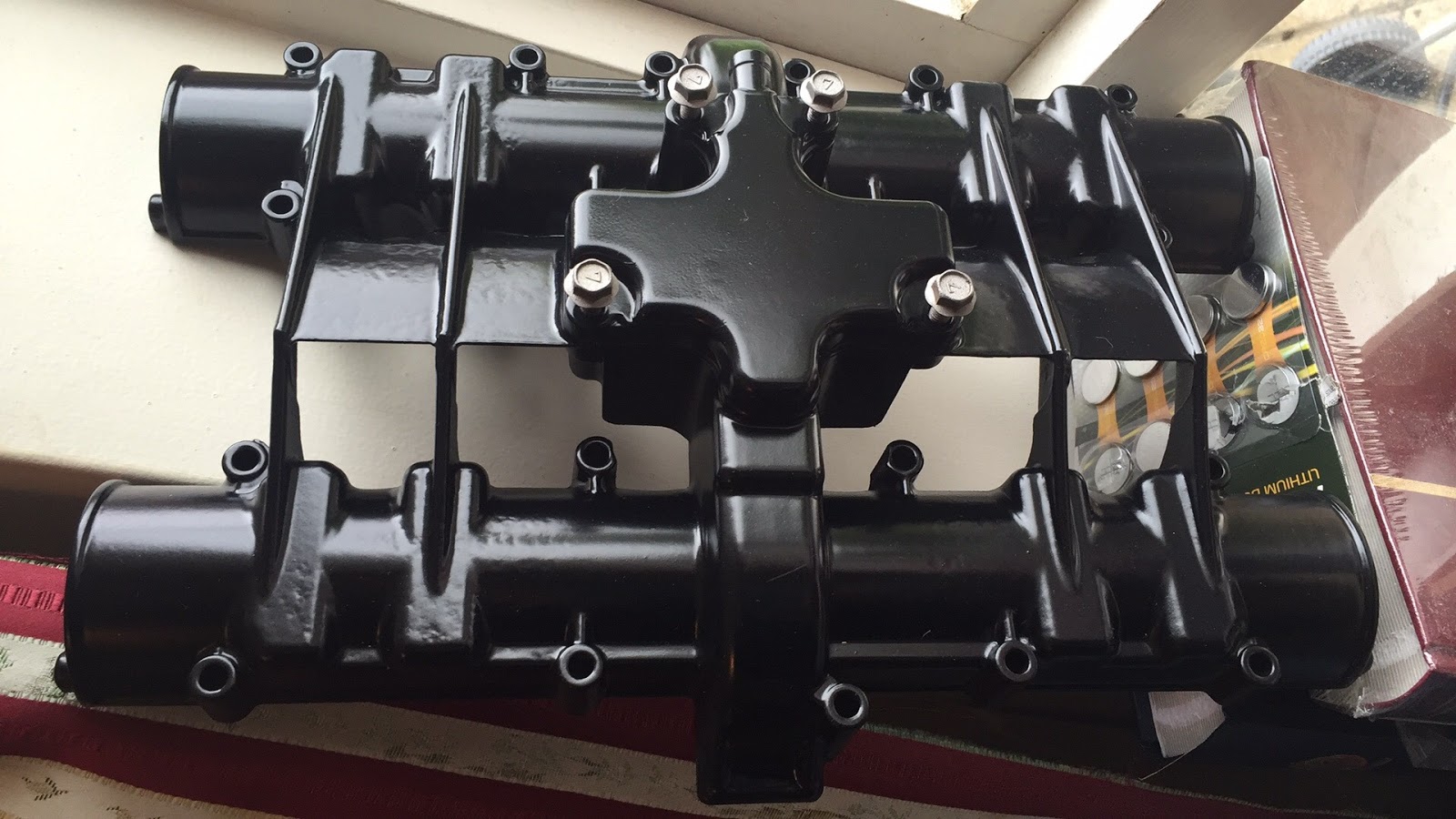
After I sprayed my engine head cover with PJ1 black gloss engine enamel paint I ran the procedure below and the paint not only survived but is now hard as a rock and looks beautiful.
Based on my experiments I can clearly tell that PJ1 is more durable and can withstand 40 minutes of 210C or 410F.

The procedure :
1. Let the paint dry for 10 hours.
2. Heat the part to 90 degrees Celsius for 30 min.
3. Let the part cool down to room temp.
4. Heat the part to 150 degrees Celsius for 30 min.
5. Let the part cool down to room temp.
6. Heat the color to 210 degrees Celsius for 30 min.
7. Let the part cool down to room temp.

An interesting fact is that the curing smell (release of solvents or adhesion process) still took place well into the 210C stage.
 
Last edited:
I noticed some new (?) silicone based paint HERE (I know, advance auto but that's where I saw it...

Says resists up to 1500. I'll probably go with that for just the block part of engine , and then sand the tips of cooling fins.
Been polishing the heck out of the lower motor and some of top, finishing off with "mother's alum. polish" and nothing on finned part starting to look strange...

Odd thing, I fabricated the exhaust from header to custom (other MC) muffler and sprayed .99 cent/spray-can matte black on that section and it has not peeled or burned, I really just used it as a mock up but it's lasted around hundred miles atleast...weird I guess.:confused:Need to paint the "SUZUKI" on both covers black soon.
Thanks for the tips.
 
One thing that I have found in the preparation stage; make sure it is clean, clean and clean before painting. Then put in the over at 200C for some time. This gets all the crap out of the metal pores. Then clean again and again (with paint thinners or acetone). Use a primer (like VHT) and do not put the paint on too thick. Multiple thinner coats.

IMG_0576a.JPG


(The bumpy stuff is underlying corrosion - I had this item blasted before painting)
 
Back
Top