• Required reading for all forum users!!!

    Welcome!
    Register to access the full functionality of the GSResources forum. Until you register and activate your account you will not have full forum access, nor will you be able to post or reply to messages.

    A note to new registrants...
    All new forum registrations must be activated via email before you have full access to the forum.

    A Special Note about Email accounts!
    DO NOT SIGN UP USING hotmail, outlook, gmx, sbcglobal, att, bellsouth or email.com. They delete our forum signup emails.

    A note to old forum members...
    I receive numerous requests from people who can no longer log in because their accounts were deleted. As mentioned in the forum FAQ, user accounts are deleted if you haven't logged in for the past 6 months. If you can't log in, then create a new forum account. If you don't get an error message, then check your email account for an activation message. If you get a message stating that the email address is already in use, then your account still exists so follow the instructions in the forum FAQ for resetting your password.

    Have you forgotten your password or have a new email address? Then read the forum FAQ for details on how to reset it.

    Any email requests for "can't log in anymore" problems or "lost my password" problems will be deleted. Read the forum FAQ and follow the instructions there - that's what we have one for...

  • Returning Visitors

    If you are a returning visitor who never received your confirmation email, then odds are your email provider is blockinig emails from our server. The only thing that can be done to get around this is you will have to try creating another forum account using an email address from another domain.

    If you are a returning visitor to the forum and can't log in using your old forum name and password but used to be able to then chances are your account is deleted. Purges of the databases are done regularly. You will have to create a new forum account and you should be all set.

GS850 high idle, one more time....

  • Thread starter Thread starter Guest
  • Start date Start date
G

Guest

Guest
Hi Guys. I know this topic has been beaten to death, and the answer to my question is probably buried somewhere in the archives, but starting a new thread guarantees that I will ask exactly the right question.

First, this is what my bike is doing (BTW, it's an '81 GS850G with 17k miles): when I start the bike cold, I pull the choke about 1/2 way and hit the start button. It starts very easily and idles at about 1200 RPM. As it warms up (2-3 minutes), engine speed increases to nearly 3000 RPM, even with the choke fully disengaged. Nothing I do will make it settle back down.

This is what has been done to the bike and carbs relating to this issue:
1) new OEM throttle and choke cables. Each has been carefully adjusted to have a slight amount of slack when relaxed.
2) new OEM carb boots and large O-rings. I have double-checked the mating surfaces of the o-rings and the head; both are spotless. The sync port screws are snug - as are the screws that hold the boots to the head (new stainless steel, with anti-seize on the threads)
3) I have an OEM air box with a new OEM filter installed - lightly coated with oil (though there is still a small gap between the top of the air filter and the ceiling of the air box). The four rubber boots between the air box and carbs aren't new, but they are still nice and pliable, and correctly oriented in rotation. The rubber gaskets on each end of the air box aren't perfect, but they look like they're probably good enough to make a pretty good seal.
4) all eight rubber boots are fully seated on their mating surfaces, with the clamping bands properly aligned and snug.
5) the carbs have been rebuilt - twice - the 2nd time by one of the gurus on this forum who clearly knows what he's doing. I've tried setting the mixture adjustment screws to 2.5, then 3 full turns from seated. I couldn't detect any difference. After I made the adjustments, I rode the bike around the block a couple of times to see if anything might change; it didn't.

ARGH!!!! It's a good thing I wasn't working in an upstairs shop with windows, and I'm not nearly strong enough to throw a 600 # bike very far, 'cause if BOTH had been the case, that's what I'd have done!

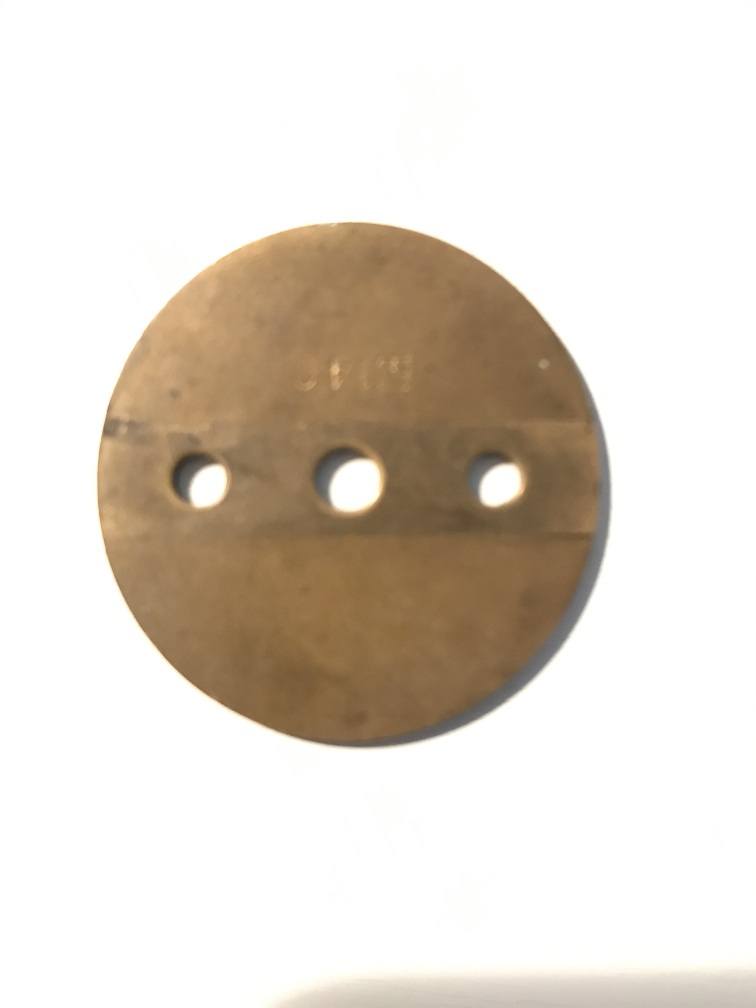
The only thing that may be slightly suspect is my vacuum line to the fuel petcock. It is slightly stiff, but still in good enough shape to provide the vacuum required to actuate the diaphragm inside the petcock. Also... the #3 carb is from a different bike, and the butterfly disc is stamped "135", whereas the three other (original) ones are stamped "130".

Does anyone have any idea what's going on?
 
The only thing that may be slightly suspect is my vacuum line to the fuel petcock. It is slightly stiff, but still in good enough shape to provide the vacuum required to actuate the diaphragm inside the petcock. Also... the #3 carb is from a different bike, and the butterfly disc is stamped "135", whereas the three other (original) ones are stamped "130".

Does anyone have any idea what's going on?

The two things above throw out red flags. I have no idea what the difference is between the butterflies, but if they are different that might be the issue.

First of all, replace your vacuum hose. It's cheap to do - take your hose to an auto store and buy a length of the same diameter. That way you rule that out.

If there's still no improvement, have you balanced the carbs? If so, and the problem is still there I'd be thinking the odd butterfly / carb might be the issue.
 
The odd butterfly won't cause this issue. There is a vacuum leak somewhere. The air filter must fit the airbox. On my old 1000S removing the air filter caused a high idle.
 
Ok. So I've been planning to fill that gap between the air filter and the air box; this would seem to be the perfect time to do that.

And if that doesn't fix the problem, do you know of a good way to find a vacuum leak? I've heard others on this forum say that using WD-40 isn't sufficient.
 
What about propane. Like a torch just don't light it. Wave around various locations till it gets drawn in.

Smoke or vape thing if you've got that on hand. Slowly gets sucked in. Just a couple of thoughts.
 
You can use brake cleaner or starter fluid - spray it around the intake manifolds and listen for increases in RPM.

You will want to balance the carbs as well. At least bench sync them.

BTW - when you said carb 3 is from "a different bike" did you mean the same model?
 
You can use brake cleaner or starter fluid - spray it around the intake manifolds and listen for increases in RPM.

You will want to balance the carbs as well. At least bench sync them.

BTW - when you said carb 3 is from "a different bike" did you mean the same model?

The carbs were bench synced by the forum member who rebuilt them, and then he did a vacuum sync, and then installed them on his own 850 and got them perfect before he shipped them back to me. That's what's so frustrating about this.

As for what model the #3 carb came off of, I got it from yet another forum member, and I think he said it was from a GS1000 - though I'm not certain of that. Since it's the same diameter of the other three, no one can figure out what those numbers refer to.
 
OK - have you ever had this bike running right? Is this a new problem per se or has this been happening since the start?

Assuming the carbs are OK, have you checked the ignition timing / distance from the rotor to the pick-ups?
 
OK - have you ever had this bike running right? Is this a new problem per se or has this been happening since the start?

Assuming the carbs are OK, have you checked the ignition timing / distance from the rotor to the pick-ups?

Hi Hillsy. Thanks for the suggestions. No, the bike has never run "right". It has been close, but never right. When I bought it last December, it had a gaping hole in one of the intake boots (so of course it wouldn't run at all), so I replaced all four of them with new OEM items. I really don't suspect the ignition elements because once I get the bike off of idle, it pulls pretty strongly. Plus, the bike DID idle normally before this last rebuild, but had other carb-related issues - which is why I had them rebuilt a second time. So the high idle issue is new, after this most recent rebuild. I'm going to seal my air cleaner element, and if that doesn't fix the problem, I'll start checking for vacuum leaks. There IS an answer to this - as frustrating as it may be.
 
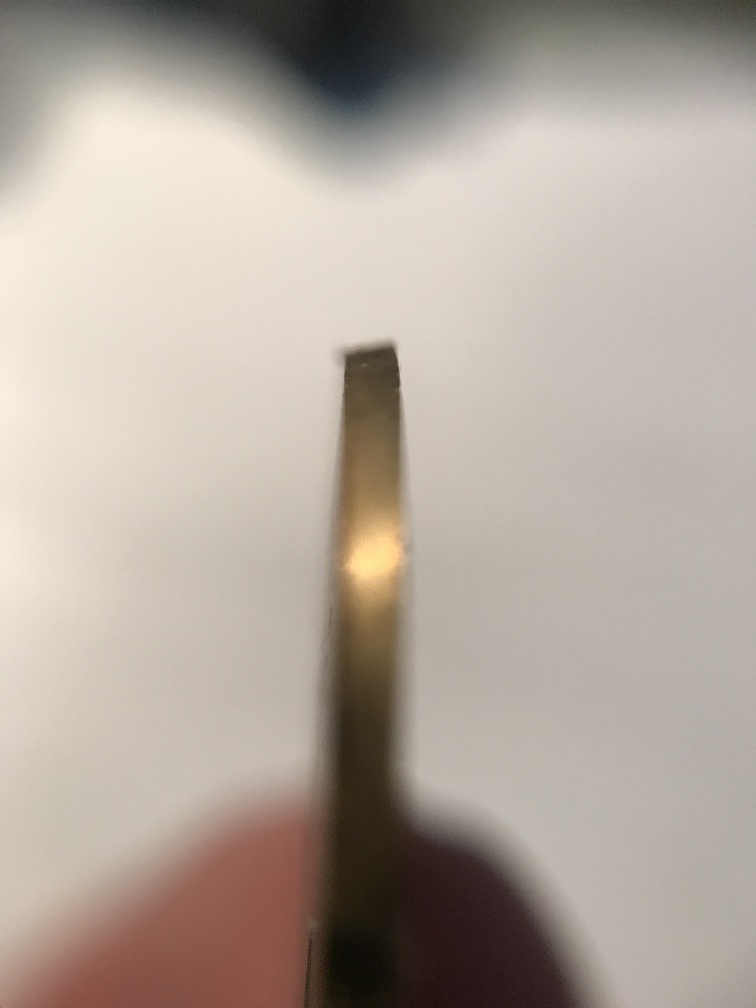
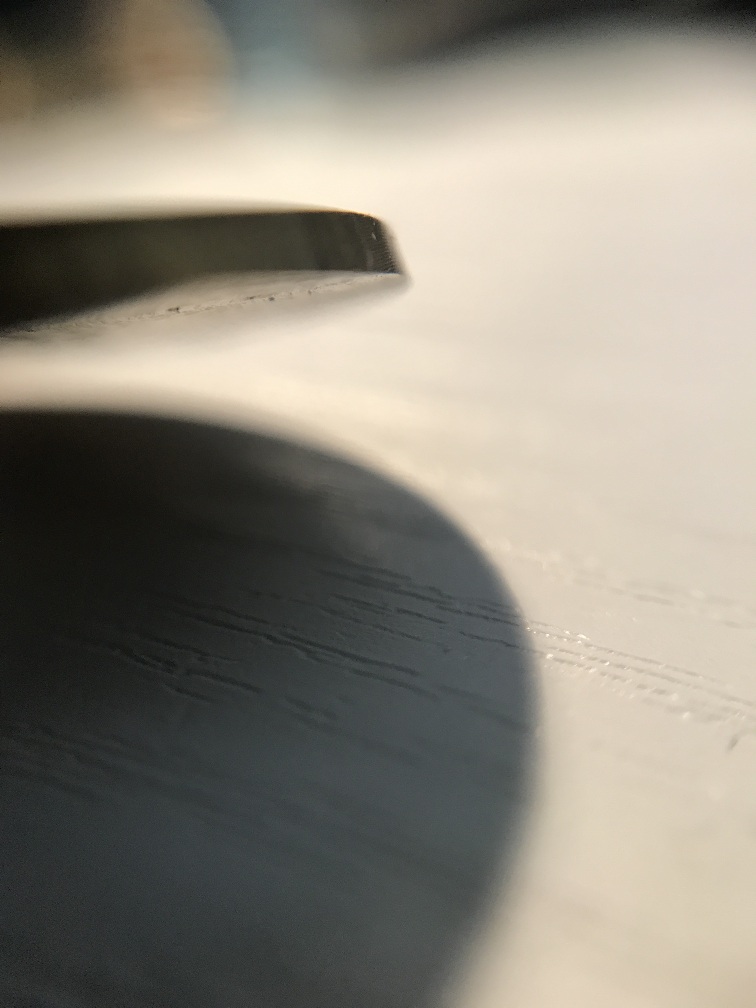
Here's something about the butterflies; the number stamped on them refers to the cut of the sealing surface. The butterfly valves are sort of egg shaped and they need to completely close a perfectly round hole. They do this by being fully closed at about 3 degrees off horizontal. The edge of the valve is champhered in order to effect the seal.

IMG_6125.jpg


IMG_6126.jpg


IMG_6128.jpg


Now if the butterfly was changed and placed into a carb body in which the champher did not match the internal bore of the carburettor, then that butterfly would not close properly. That could be one issue. I would test this by removing the plug on cylinder 3 and seeing if you get the same high idle. Obviously on 3 cylinders it will not idle as well but I'm sure you would be able to tell if it had the same urge to spin higher.

Then the other thing to check is that the carb no.3 that you say was changed over has the same internal diameter at the engine end and that it is jetted the same as the other carbs and that the float height is correct.

If all that is good, remove the vacuum hose completely, turn gas to Prime, put your thumb over the vacuum hole and try that. It night still be that the vacuum hose or indeed the petcock itself, has problems.
 
Last edited:
So now we know! But I'm not clear on what you mean by "cut of the sealing surface". Does the number refer to the angle at which the chamfer is cut? And knowing this, would you expect a valve that is stamped "135" to be fully compatible with three others that are stamped "130"?

I did notice when I had the idle adjustment screw backed out far enough to be disengaged from the adjuster on the #3 carb, that the valves kind of got "sticky" when they were fully closed. Could the one "135" valve cause this?
 
I would think that the whole carb was replaced, instead of just a butterfly being swopped into an existing carb body. Therefore the "135" butterfly would be matched to that carb, and not cause the high idle problem.

The part that I find interesting, is the fact that you say the set of carbs was synced on another bike. I know that the particular forum member who rebuilt the carbs would have synced them perfectly on his bike, but that is not to say the situation is still the same on your bike. Most importantly, airflow through the carbs is affected by valve clearances, and therefore will not be the same on your bike compared to his.

I would suggest that you first check the valve clearances on your bike and then vacuum sync the carbs on your bike.
 
I would think that the whole carb was replaced, instead of just a butterfly being swopped into an existing carb body. Therefore the "135" butterfly would be matched to that carb, and not cause the high idle problem.

The part that I find interesting, is the fact that you say the set of carbs was synced on another bike. I know that the particular forum member who rebuilt the carbs would have synced them perfectly on his bike, but that is not to say the situation is still the same on your bike. Most importantly, airflow through the carbs is affected by valve clearances, and therefore will not be the same on your bike compared to his.

I would suggest that you first check the valve clearances on your bike and then vacuum sync the carbs on your bike.

Yes, the entire carburetor was installed, since the issue was the broken float tower in the original carb.

And yes, I am aware that the settings of the valves has a large influence on how much air the engine draws through the carbs. I have only checked four of the valves on my bike, and since the smallest gauge on my set was .002", I was only able to confirm that the four valves I checked were not too loose. Can there be that large of a difference between HIS bike and MY bike that it creates this problem?
 
Yes there can be a big difference between bikes.

Mostly with these bikes, when the cams and valves wear, the gap gets smaller and smaller. With camshafts that have rockers, when they wear the gap gets bigger. If you are having trouble finding a decent gap then you are in trouble.

It is always better to veer on the side of a bigger gap (as the wear over time will make it smaller) in the range 0.0013 to 0.0030 inches (check these measurements for your specific model). I would go for at least 0.0020 all round. The effect of valves not closing completely (if there is no gap to allow them to do this) would have a greater detrimental effect on performance (because compression would be compromised) than if the gap was a little too large, which would have the effect of them being closed for a tiny bit longer than desired.

So, first check before any carb adjustments is always always valves.

Oh and try taking the lead of cylinder 3 and starting the engine.
 
Last edited:
To address a few flags that popped up in my brain:

- Yes, the top of the air filter MUST be sealed to the airbox, or it will act like an air leak. Worse, it will draw in unfiltered air. I use a layer of self-adhesive foam weatherstripping on the top of the air filter (obviously, make sure the metal frame of the air filter is squeaky-clean and totally degreased before attempting). It takes a bit of craftsmanship to get the corners right so they don't leak, and to make sure the foam doesn't migrate when you slide the assembled filter unit into place. I also put a little grease on the top of the weatherstripping so it'll slide instead of ripping off when you push the air filter into place.

All the other caveats for the filter apply as well -- make sure it's only very, very lightly oiled, that the foam is in good shape, and there are no leaks. Make sure the airbox is properly sealed so that air only gets in where it's supposed to (through the snorkel and the vents in the bottom) and can't bypass the air filter. Make sure the snorkel on the back of the airbox is installed.

- Every bike is different, and a carb sync on a different bike is meaningless. A bench sync will get it close enough to start the bike, that's all.

- Yes, you really, honestly, truly have to do a valve check completely and the right way on every valve. Sorry, that's the way it is.

- I really wouldn't worry that much about the different throttle butterfly yet. You have a massive air leak, most likely several tight valves, probably a bad petcock, possibly a bad fuel/vacuum line, and maybe a few other odds and ends we don't know about.

- Vintage vehicles require a very different mindset than newer vehicles -- there's NEVER just one problem you can fix and then go ride. You have to find and fix many different issues that overlap in complex and sometimes surprising ways. Fortunately, the path is well-known...

- Carbs can and do re-clog, no matter how reputable the person who cleaned them, especially if you have an old petcock or if the bike sits for several weeks.

- Just to reiterate: YES you MUST do a COMPLETE valve check and get ALL the clearances right. This is not optional.

- Once you deal with the air leak and valve clearances, then you need to check the carb sync. If #3 is way out of line, then maybe there's some sort of difference in the butterflies. I honestly wouldn't bother thinking about the numbers on the butterfly one more second.

- Just a random thought, for which I apologize in advance: you are using proper Viton or OEM o-rings on the carb/cylinder head boots, correct? Regular hardware store Buna-n o-rings will VERY quickly disintegrate when subjected to the heat of the cylinder head.

- Yes, it's well worth the few bucks to replace the carb-airbox boots as well. You think yours are in good shape, but you'll be astonished at the difference if you get your hands on a new set. And it'll make removing and reinstalling the carbs sooooooo much easier.
 
Well..... clearly I have my work cut out for me!

I am on my lunch break at the moment, and I went to our local hardware store and bought some weather stripping that looks like it'll do the trick. It is 1/4" thick, and made up of two D-shaped moldings side-by-side. I will use alcohol on the metal frame to get it completely clean, then apply just a thin layer of oil on the top of the weather stripping to make sure it doesn't bind as I slide it into place.

As for the carb boots and O-rings, yes, they are genuine Suzuki parts. I'm trying real hard to install factory parts whenever I can.
 
Well the non-sealed air cleaner wasn't the problem. I installed the weather stripping I bought yesterday and it had zero affect on the high idle.
 
My 850 for the longest time had a high idle issue. Started fine, ran for a short time fine but ten minutes later when I stopped it would rev to 1500+ rpms. I can't say for sure what the cause was but it's gone.

What's changed? I had the pilot or mixture screws at 1.5 turns out which are now at 2.75 turns. Changed carb boots and O-rings, vacuum synched carbs, adjusted valves to all the same clearances .064mm, clipped a bit off the plug wires and changed plugs, replaced the R/R with an SH775, cleaned electrical connections and added single point ground, sealed the airbox and filter basket on top and then ran the snot out of it. 5k miles later it's stable at 1100 rpms every time it runs.
Oh, I tell it goodnight every time I shut the garage. Maybe that's it! just kidding... but I'm thinking it ;)
 
Back
Top