• Required reading for all forum users!!!

    Welcome!
    Register to access the full functionality of the GSResources forum. Until you register and activate your account you will not have full forum access, nor will you be able to post or reply to messages.

    A note to new registrants...
    All new forum registrations must be activated via email before you have full access to the forum.

    A Special Note about Email accounts!
    DO NOT SIGN UP USING hotmail, outlook, gmx, sbcglobal, att, bellsouth or email.com. They delete our forum signup emails.

    A note to old forum members...
    I receive numerous requests from people who can no longer log in because their accounts were deleted. As mentioned in the forum FAQ, user accounts are deleted if you haven't logged in for the past 6 months. If you can't log in, then create a new forum account. If you don't get an error message, then check your email account for an activation message. If you get a message stating that the email address is already in use, then your account still exists so follow the instructions in the forum FAQ for resetting your password.

    Have you forgotten your password or have a new email address? Then read the forum FAQ for details on how to reset it.

    Any email requests for "can't log in anymore" problems or "lost my password" problems will be deleted. Read the forum FAQ and follow the instructions there - that's what we have one for...

  • Returning Visitors

    If you are a returning visitor who never received your confirmation email, then odds are your email provider is blockinig emails from our server. The only thing that can be done to get around this is you will have to try creating another forum account using an email address from another domain.

    If you are a returning visitor to the forum and can't log in using your old forum name and password but used to be able to then chances are your account is deleted. Purges of the databases are done regularly. You will have to create a new forum account and you should be all set.

Hillbilly Valve Spring Compressor

The compressed air will hold the valve in place but you still need something to compress the spring so you can get the keeper installed. This is not a job I would look forward to doing with the head on the bike.

No more complicated than making an ordinary redneck spring compressor?
 
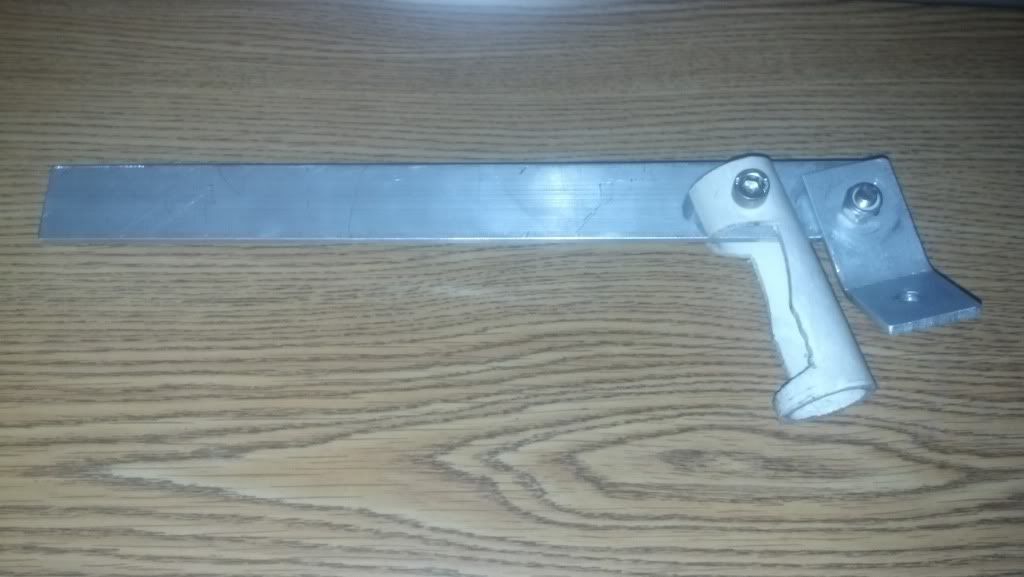
I removed and replaced the valve stem seals on my KLR650 (same shim-over-bucket setup as a GS) with an air hold and this home made compressor device.

I used 40 psi to hold the valve up once I had the keepers off, and increased it to 60 psi while I was actually working on the valve. No scientific reason -- this just felt right. YMMV -- GS valves are a bit smaller, so you may want to use a bit more pressure.

I also put the piston at TDC so the valve wouldn't drop all the way out if I lost air pressure. I made sure to secure the crank VERY well so the engine couldn't rotate with the air pressure. You'd want to do the same with a GS; set it to TDC, do those cylinders (1 and 4), then rotate 180 degrees and do the others. Fortunately, a GS is easy to re-time when you rotate the engine with the camshafts out.

The angled bit with the hole bolts to one of the cam cap holes. To move from the intakes to the exhausts, I reversed the fittings on the lever.

I thought I would just use the PVC to get the shape right then re-create it with metal tubing, but as it turned out the PVC held up just fine.

I'm pretty sure something similar would work with a GS. It was a tight fit on the KLR, but it worked. Pulling the old valve stem seals was the hard part, since there was so little vertical clearance to get my puller (a modified pair of large needlenose pliers) in there.

2013-03-02_09-30-47_107_zpsa3d538f6.jpg
 
I removed and replaced the valve stem seals on my KLR650 (same shim-over-bucket setup as a GS) with an air hold and this home made compressor device.

I used 40 psi to hold the valve up once I had the keepers off, and increased it to 60 psi while I was actually working on the valve. No scientific reason -- this just felt right. YMMV -- GS valves are a bit smaller, so you may want to use a bit more pressure.

I also put the piston at TDC so the valve wouldn't drop all the way out if I lost air pressure. I made sure to secure the crank VERY well so the engine couldn't rotate with the air pressure. You'd want to do the same with a GS; set it to TDC, do those cylinders (1 and 4), then rotate 180 degrees and do the others. Fortunately, a GS is easy to re-time when you rotate the engine with the camshafts out.

The angled bit with the hole bolts to one of the cam cap holes. To move from the intakes to the exhausts, I reversed the fittings on the lever.

I thought I would just use the PVC to get the shape right then re-create it with metal tubing, but as it turned out the PVC held up just fine.

I'm pretty sure something similar would work with a GS. It was a tight fit on the KLR, but it worked. Pulling the old valve stem seals was the hard part, since there was so little vertical clearance to get my puller (a modified pair of large needlenose pliers) in there.

2013-03-02_09-30-47_107_zpsa3d538f6.jpg

Thanks for sharing, super useful info! I will definitely try that :)
 
This is a Hillbilly method that works...
You don't need a window in the socket to remove the keepers.(collet)
If you hold the unmodified socket on the valve spring a diplomatic smack with a hammer on the socket will bump the keepers out.
Pre-compress the springs and zip tie them for installation.
 
Last edited:
I've read that it can be done by pressuring up the cylinder with an airline. Guess you'd need a fairly high pressure. Sounds feasible, I'll try it next time I need new seals.

Yeah you can do that, though still need the piston at the top just in case the air pressure is some how released. It can happen and I've seen it happen, doesn't take much either.
 
I don't have the equipment to cut up a socket, so I went to Harbor Freight and wandered around until I spotted a $5 oxygen sensor socket.

I've never changed an oxygen sensor, but for some reason it gets a special socket with a panel missing. So it's pretty much the same idea, except the cutting is already done for you.


This gave me the access I needed to get those little keys out.


Worked great, especially for someone like me who doesn't plan on doing this job again!
 
I have heard of a rope in the cylinder to remove the springs for refreshing stem seals before with the head on the bike.

So how do you get the rope in so you can jam it with the piston? Thru the intake port or something?

I admittedly haven't done a search for such tricks...sorry.
 
Yeah, I started with PVC, even made a video that is posted on BassCliff's site, but found that the PVC deforms too much.
It's also a bit "fiddly" trying to glue a washer to the end of the PVC to give the clamp something to push on.

After searching around for various bits of metal that would be stronger, I decided on a deep-well socket. Plenty strong sides, and the (mostly) closed end where the ratchet is attached just keeps the c-clamp from falling into the middle. That is the hole that Brian evidently uses to bolt it to the clamp.

.

Yeah I tried the PVC when I did the head but it flexed too much and split. I took a piece of 1/8" x 3/4" steel bar, bent it into a "U" shape and used that. Now that was a real PITA to keep square and prevent parts from flying across the shop. Stubborn, boneheaded tenacity got the job done.:eek: Next time I'll breakdown and buy a socket to cut up.:-\\\
 
I have heard of a rope in the cylinder to remove the springs for refreshing stem seals before with the head on the bike.

So how do you get the rope in so you can jam it with the piston? Thru the intake port or something?

I admittedly haven't done a search for such tricks...sorry.


The rope goes in through the spark plug hole. Just stuff as much rope as you can in there when the piston is at BDC, leave the rest hanging out, then turn the engine a bit to squish the rope against the valves. Secure the engine so it doesn't rotate, and you're ready to go.

I'd use a new-ish, clean rope -- something flexible that won't flake apart or get grit in the cylinder.
 
I've never changed an oxygen sensor, but for some reason it gets a special socket with a panel missing. So it's pretty much the same idea, except the cutting is already done for you.

Hey, nice find. $5 is a bit steep for a socket missing 1/5 of its material, but I guess it's better than the price of a valve spring compressor.

BTW, the "some reason" is because oxygen sensors have a wire sticking out of them.

What size C-clamp do you need for this, anyway?
 
Get the largest one you can. I'll get the exact size for you tomorrow though it you want as it's in my tool box in the other garage.
 
What size C-clamp do you need for this, anyway?

If you check the photos, mine says 8" on it. That's 200mm if you're a metric type.

oldgsfan's is also an 8" c-clamp.


One detail that's different is that on mine, the socket is bolted to the "static" end of the clamp (it's left a little loose so I can easily turn the socket so the window is in the right spot). This is a LOT easier than trying to juggle the socket separately.

This also avoids damaging the cylinder head with the static end of the clamp -- you can place the nose of the clamp screw directly against the valve. The "static" end of the clamp can gouge the aluminum cylinder head, and may not reach the valve on some cylinder heads.
 
Last edited:
Back
Top