• Required reading for all forum users!!!

    Welcome!
    Register to access the full functionality of the GSResources forum. Until you register and activate your account you will not have full forum access, nor will you be able to post or reply to messages.

    A note to new registrants...
    All new forum registrations must be activated via email before you have full access to the forum.

    A Special Note about Email accounts!
    DO NOT SIGN UP USING hotmail, outlook, gmx, sbcglobal, att, bellsouth or email.com. They delete our forum signup emails.

    A note to old forum members...
    I receive numerous requests from people who can no longer log in because their accounts were deleted. As mentioned in the forum FAQ, user accounts are deleted if you haven't logged in for the past 6 months. If you can't log in, then create a new forum account. If you don't get an error message, then check your email account for an activation message. If you get a message stating that the email address is already in use, then your account still exists so follow the instructions in the forum FAQ for resetting your password.

    Have you forgotten your password or have a new email address? Then read the forum FAQ for details on how to reset it.

    Any email requests for "can't log in anymore" problems or "lost my password" problems will be deleted. Read the forum FAQ and follow the instructions there - that's what we have one for...

  • Returning Visitors

    If you are a returning visitor who never received your confirmation email, then odds are your email provider is blockinig emails from our server. The only thing that can be done to get around this is you will have to try creating another forum account using an email address from another domain.

    If you are a returning visitor to the forum and can't log in using your old forum name and password but used to be able to then chances are your account is deleted. Purges of the databases are done regularly. You will have to create a new forum account and you should be all set.

Minimum battery voltage for starting?

  • Thread starter Thread starter Guest
  • Start date Start date
G

Guest

Guest
The other day, Miss Bugly had a hard time starting. She finally did, but not like in the past. The next day when I went to my local parts store for more SeaFoam, she refused to start and had to be bump-started. When got home, I put the charger on her and found she was taking almost 9 amps in charge. My question is, what is minimum voltage below which the bike will crank but not fire?

Yes I am going to do another charge test tomorrow but I would like to know minimum voltage requirements if possible. Thanks.

PS; dry battery (Optima) or new generation AGM or similar?
 
Dunno, I'd say when the bike cranks, it'll fire as well.

I could be mistaken though, as I'm kick-starting mine all the time anyway.
 
I can start mine with a 9v transistor radio battery. But it has a kickstarter and points ignition. You probably don't have that on your 1100. So you probably need the 10.76439571v as Posplayr mentioned.
 
The way I look at it the voltage is not as important as you might think. It's an indicator of battery state.
Energy is what cranks the bike and if the battery has a high internal resistance as soon as the starter draws current the voltage will fall off the scale.
A bad analogy perhaps but what pressure do you need to water the lawn ? Any pressure will do if the flowrate is high enough but no pressure on earth will water it through a pinhole.
You will see various rules of thumb about voltage not falling below 'x' during cranking etc. Some bikes are in better health than others and will start more easily.
9 A is a lot. Too much imho for a 14Ah battery and will warp plates if they aren't already
 
Some accurate answers here, and some just a bit misleading, but most were pretty close.

Posplayr is probably right, but none of my meters is quite that accurate. I have always looked for "more than 10 volts" as my cut-off point. Since your bike does not have a kick starter, the condition of your battery is VERY important. The load imposed by the starter is usually rather constant. The condition of the battery, however, degrades with time, and cannot supply enough current to spin the starter adequately. As the starter draws from the battery, the voltage drops. When the battery is not strong enough to maintain at least 10 volts, there is not enough power left to run the ignition system.

Brendan W also brought up another point: a 9-amp charge is WAY too much for your battery. That alone might be killing it. The standard charge rate for any lead-acid battery is 1/10 of its capacity. You have a 14 amp-hour battery, the max charge should be 1.4 amps, but a 1.5 amp charger is not going to kill it. Even a 2 amp charger won't do much damage, but I would not go much more than that.

Replacement? A dry battery might be OK, but don't go for exotic stuff like lithium. Smaller, lighter, yeah, but they require a different charge profile than what our bikes can provide. AGM (absorbed glass mat) is the current (pardon the pun) favorite. Note that it is a construction style, not a brand name. AGM batteries can be found for less than $50 on the internet or about $80 in your local stores. They will usually come "fully-charged, ready to use", but I would still put it on a trickle charge overnight to make sure it is topped off.
 
The other day, Miss Bugly had a hard time starting. She finally did, but not like in the past. The next day when I went to my local parts store for more SeaFoam, she refused to start and had to be bump-started. When got home, I put the charger on her and found she was taking almost 9 amps in charge. My question is, what is minimum voltage below which the bike will crank but not fire?

Yes I am going to do another charge test tomorrow but I would like to know minimum voltage requirements if possible. Thanks.

PS; dry battery (Optima) or new generation AGM or similar?

A fully charged battery will show 12.8V or so with no load and this makes no difference at all. The important thing is what voltage and current it can supply under a heavy load such as running the starter. There is pretty much no way to check static voltage and know how the battery will respond under load.

On another note, hitting that battery with 9A charge current is asking for trouble. Watch your fluid levels and temperature of the battery with that kind of input current.


10.76439571V is the absolute minimum. Feel better knowing?

Always the man with the precision answer!


Mark
 
Thanks for all the input (pun intended) and the recommendations on battery type. As soon as the showers clear I am going to do a complete charging test (again) just to verify charging output/rate is within factory specs. Battery load test is also warranted today. With that said, the fact that the headlight stays on during cranking, will that extra load put extra stress on the battery at starting, and if so, is there a (recommended) method to put a switch inline with the headlight to be able to turn it off when I start her, and would that help lessen the load on the battery and extend its useful life?

The advice on 9 amp charging rate is appreciated, I did not know that. It seems the battery suffered no ill effects and after charging she started immediately. Battery did not heat up during charging and voltage test after charging showed a standing rate of 12.7 volts. I have not checked standing voltage yet today but will post results later.
 
In the battery world charging rate is scaled by battery capacity. A very safe charge rate that is almost independent of technology is C/10. For a 14 amp-hr battery that is 1.4 amps. (i.e. 14 amp-hr/10=1.4 amps)For lead acid battery that corresponds to low 13's charging voltage. By the time you get over 14V you are charging at 3-4 amps and C/5 and beyond.
 
A fully charged battery will show 12.8V or so with no load and this makes no difference at all. The important thing is what voltage and current it can supply under a heavy load such as running the starter. There is pretty much no way to check static voltage and know how the battery will respond under load.
Absolutely, indicated internal resistance is a direct measure of state of charge and the indicated internal resistance refers to how much the terminal voltage drops when you put on a known load.

My main issue with using the starter as a load (to measure battery SOC/internal resistance) is that the starter can draw high current for a variety reasons due to bad brushes or armature shorts that would pull the battery down lower that you would expect making you suspect the battery when teh starter is the issue.

The Quick Tests is designed around a typical electrical load based on lights which will not exceed the typical 10 amps you will have with the headlamp and tail lights on. Also 10 amps is over 2/3C load and is plenty to test the battery SOC in a typical operational range. If you turn on the ignition and with lights on and teh battery stays above 12V (down from about 12.8) you have a good battery and a good SOC.

On the other hand using a bad stater to do a battery load test you could have all types of consternation about bad batteries even if you just bought a new one. You cant go wrong using the electrical load from lights, you can definitely draw the wrong conclusion from using a starter for a load test.
 
So, did I do some damage that I cannot see/measure? My consternation level is rising, I may have to sit quietly for a while in the dark...
 
Thanks for all the input (pun intended) and the recommendations on battery type. As soon as the showers clear I am going to do a complete charging test (again) just to verify charging output/rate is within factory specs. Battery load test is also warranted today. With that said, the fact that the headlight stays on during cranking, will that extra load put extra stress on the battery at starting, and if so, is there a (recommended) method to put a switch inline with the headlight to be able to turn it off when I start her, and would that help lessen the load on the battery and extend its useful life?

The advice on 9 amp charging rate is appreciated, I did not know that. It seems the battery suffered no ill effects and after charging she started immediately. Battery did not heat up during charging and voltage test after charging showed a standing rate of 12.7 volts. I have not checked standing voltage yet today but will post results later.

If you just did a Quick Test most of these things that you are learning would fall by the way side as the test is designed to eliminate the vast majority of the ambiguities.
 
So, did I do some damage that I cannot see/measure? My consternation level is rising, I may have to sit quietly for a while in the dark...

Normally overcharging is associated with splattering electrolyte and overheating of the battery. If it has not been mentioned enough times yet a battery load tests is what tell you if teh battery is damaged.

If you beat the hell out of it with a 9Amp charge rate and it will not stay about 11V with a standard load it is history.

Read the link on battery SOC in the quick test link. It might me "illuminating".
 
When I look at the Suzuki manuals, it seems they avoid much discussion of battery voltage...
Battery did not heat up during charging and voltage test after charging showed a standing rate of 12.7 volts. I have not checked standing voltage yet today but will post results later.
it's pointless to check the voltage of a "resting battery" until it's rested.... overnight is best. ..because the "surface charge" of a "just-off-charging" is ephemeral. I'd be very suprised to see your battery with 12.7 volts after a rest if it won't start your bike. But I wouldn't strain to see it if it doesn't....

Nowhere are used batteries discussed as viable, yet few people have brand new ones.... it seems to me pretty obvious that old batteries have less capacity. They don't take full charge anymore and so, it follows, "battery resting voltage" drops too. But a motorcycle can go along quite well for a long time with a battery that is not brand new; that does not exibit 12.65 volts at rest...
 
When I look at the Suzuki manuals, it seems they avoid much discussion of battery voltage...
it's pointless to check the voltage of a "resting battery" until it's rested.... overnight is best. ..because the "surface charge" of a "just-off-charging" is ephemeral. I'd be very suprised to see your battery with 12.7 volts after a rest if it won't start your bike. But I wouldn't strain to see it if it doesn't....

Nowhere are used batteries discussed as viable, yet few people have brand new ones.... it seems to me pretty obvious that old batteries have less capacity. They don't take full charge anymore and so, it follows, "battery resting voltage" drops too. But a motorcycle can go along quite well for a long time with a battery that is not brand new; that does not exibit 12.65 volts at rest...

Jake if you read this perhaps you realize why I answered your original question with a 6 decimal point precision. Or perhaps it is too subtle, but the number of decimal points is in direct propostion to the irrelevance of the question asked.

You are not going to figure out the relationship of SOC to battery voltage by mucking around with a voltmeter in your garage. A voltmeter is very valuable but you not only need to know how to use the voltmeter (a challenge for some) but more importantly it is the relationship between the readings and the SOC and the many variables that your will need to understand to come to any valid conclusion. Asking for a minimum voltage it is very clear you did not understand this.
 
I am not good at electrical, that has always been my weak point. I will read the SOC in the quick test link, and the rain stopped so I will do all the tests again and report the results this afternoon.
 
Okay, I think problem has been tracked down. Doing the stator AC voltage output test, one lead shows no voltage at all.Other two show over 60 volts. Am I correct in believing that the stator is bad now? With one phase showing nothing that is a positive sign that the stator, at least one phase of it is fried. Correct? Even after assembling and starting, I notice the idiot lights get brighter as I rev the engine, but is it safe to assume that there just isn't enough juice to keep the battery fully charged, am I right?

Jeez, just when I thought had everything sorted out...
 
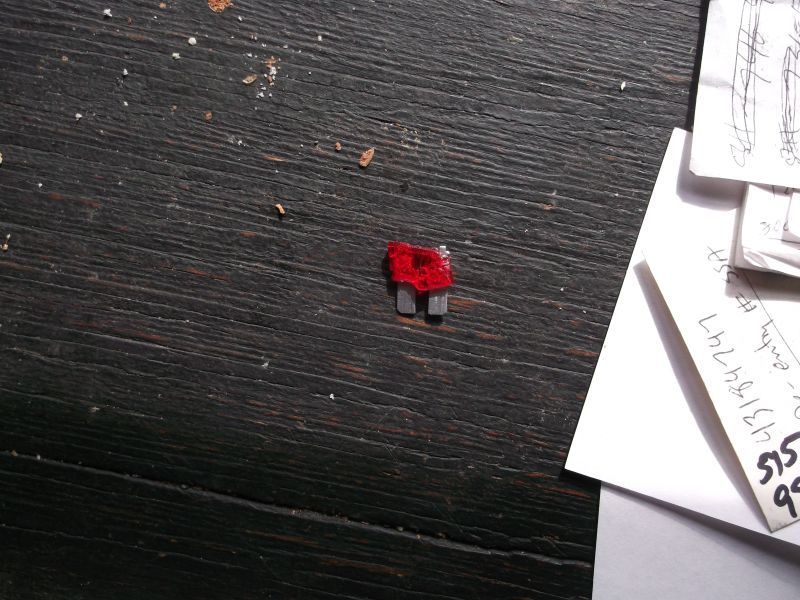
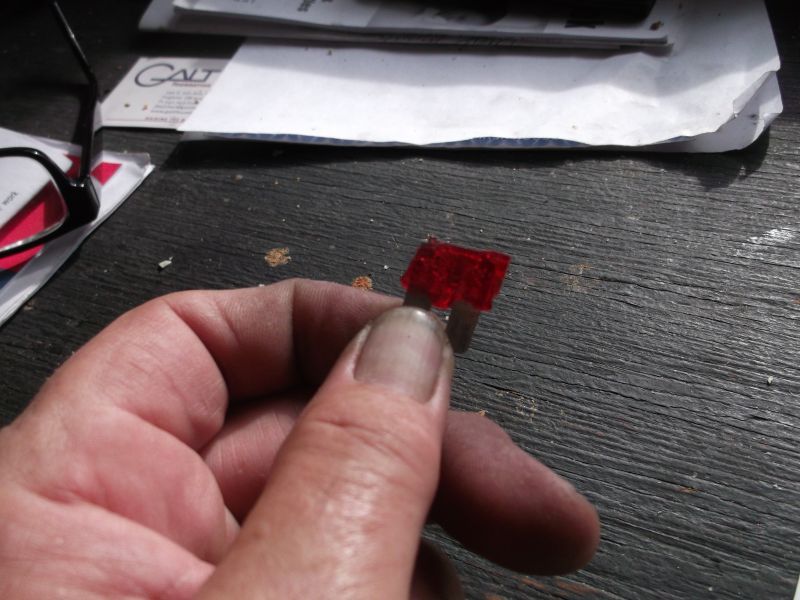
Another problem cropped up. I decided to pull the cover off the fuse block. I found the headlight fuse almost completely melted but not blown.

10Aheadlight%20fuse%202016%20003_zpsgsywmcpd.jpg


10Aheadlight%20fuse%202016%20001_zpsxzj6hxlf.jpg


Never seen this before. I know that the stator/R/R problem has one phase of the alternator going through the RH switch and headlight, the wiring harness I got and installed (new to me) had what appeared to be the wiring plug fix (loop back into plug to bypass headlight) yet this happened. I am stumped as to the reasons. I am going to get a replacement stator from a local source, could the stator going bad ( or R/R) be the cause in any way? Suggestions? I know I must be missing something.
 
That fuse melted because it was corroded and dirty snd never cleaned like the rest of the bike I assume.
 
Back
Top