• Required reading for all forum users!!!

    Welcome!
    Register to access the full functionality of the GSResources forum. Until you register and activate your account you will not have full forum access, nor will you be able to post or reply to messages.

    A note to new registrants...
    All new forum registrations must be activated via email before you have full access to the forum.

    A Special Note about Email accounts!
    DO NOT SIGN UP USING hotmail, outlook, gmx, sbcglobal, att, bellsouth or email.com. They delete our forum signup emails.

    A note to old forum members...
    I receive numerous requests from people who can no longer log in because their accounts were deleted. As mentioned in the forum FAQ, user accounts are deleted if you haven't logged in for the past 6 months. If you can't log in, then create a new forum account. If you don't get an error message, then check your email account for an activation message. If you get a message stating that the email address is already in use, then your account still exists so follow the instructions in the forum FAQ for resetting your password.

    Have you forgotten your password or have a new email address? Then read the forum FAQ for details on how to reset it.

    Any email requests for "can't log in anymore" problems or "lost my password" problems will be deleted. Read the forum FAQ and follow the instructions there - that's what we have one for...

  • Returning Visitors

    If you are a returning visitor who never received your confirmation email, then odds are your email provider is blockinig emails from our server. The only thing that can be done to get around this is you will have to try creating another forum account using an email address from another domain.

    If you are a returning visitor to the forum and can't log in using your old forum name and password but used to be able to then chances are your account is deleted. Purges of the databases are done regularly. You will have to create a new forum account and you should be all set.

Neway valve seat cutters

  • Thread starter Thread starter gearhead13
  • Start date Start date
G

gearhead13

Guest
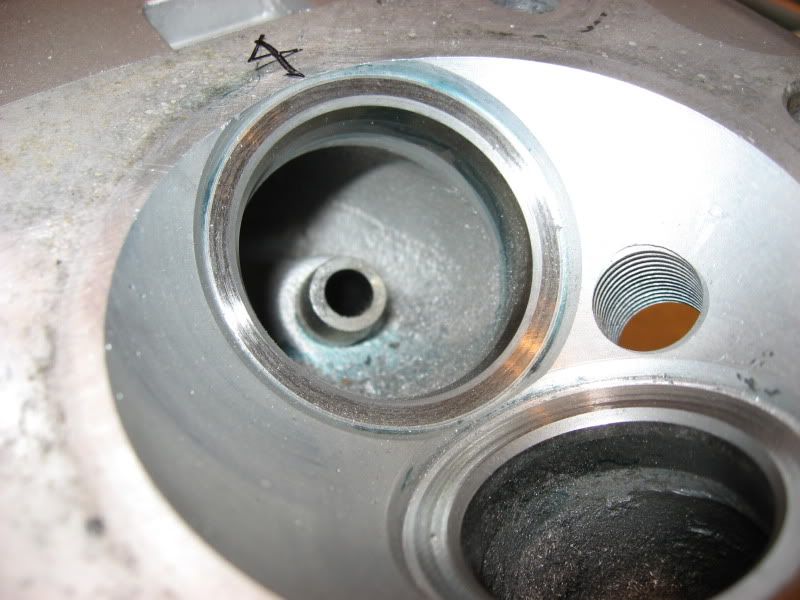
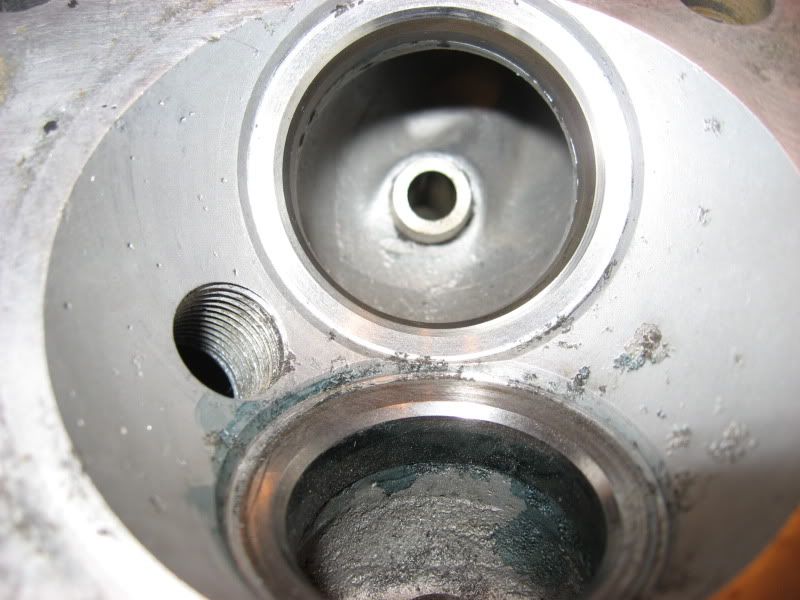
I went and bought a set of Neway valve seat cutters, for my head rebuild. I figured it would cost less than half what the machine shop would have charged for the work including oversize intakes, tried it out on an old 750 head I have laying around.
10rv51f.jpg

2wftfyb.jpg

eteb84.jpg
 
I bought a set for cutting the seats on an 8V 1000 engine. They work great, although a fair bit of work.

Your photos don't show the top cut. That's the difficult one since there is a lot of material to remove to narrow the seat down. The factory service manual lists the maximum valve seat width, and to narrow that you need that top cutter. On my 1000 engine I had to really bear down on the cutter to remove material with that top cut. Of course the two valve engines have larger valves so you should have a much easier time of it. As far as cutting out enough material to install larger valves...good luck with that. Those Neeway cutters do a great job with minor material removal but I don't know how well they will do cutting brand new seats.

Here are a couple of photos from my head. Notice the lovely corrosion pitting on that one cylinder.:(

IMG_1737.jpg


IMG_1738.jpg
 
Last edited:
I bought a set for cutting the seats on an 8V 1000 engine. They work great, although a fair bit of work.

Your photos don't show the top cut. That's the difficult one since there is a lot of material to remove to narrow the seat down. The factory service manual lists the maximum valve seat width, and to narrow that you need that top cutter. On my 1000 engine I had to really bear down on the cutter to remove material with that top cut. Of course the two valve engines have larger valves so you should have a much easier time of it. As far as cutting out enough material to install larger valves...good luck with that. Those Neeway cutters do a great job with minor material removal but I don't know how well they will do cutting brand new seats.

Here are a couple of photos from my head. Notice the lovely corrosion pitting on that one cylinder.:(

IMG_1737.jpg


IMG_1738.jpg
With the top correction cut, all you want to do is clean up the surface, not remove large amounts of material:rolleyes: Removing too much sinks your seats in too far. For the best performance and flow the narrowing should be mostly done with the inner correction cut:cool:
 
With the top correction cut, all you want to do is clean up the surface, not remove large amounts of material:rolleyes: Removing too much sinks your seats in too far. For the best performance and flow the narrowing should be mostly done with the inner correction cut:cool:

Eh, no.

The valve does not sit on the top cut, it sits on the 45. You can shave that top cut all you want and it won't change how high the valve sits.

The top cut, and the bottom cut for that matter, are to narrow the seat width (1.0 - 1.2mm on the 8v engines) and position the contact position on the valve. If, for example, the valve contact patch is out toward the OD of the valve, you lower it with the top cut. If the valve is sitting on the seat with the contact patch inboard on the valve face, then you need to use the bottom cut to move the contact upward. It's a matter of using marking blue and seeing where you are and then cutting as needed. The 45 is cut first and then the top and bottom are cut as needed to get the seat width within spec, and position where on the seat the valve is sitting.
 
Last edited:
You might find this interesting. A guy over at OSS has been doing a similar write up

How to - 3 Angle Valve Job (Read 2885 times)
AT_Blackcat
Site Supporter
oss_star.gif
oss_star.gif
oss_star.gif


AT_Blackcat.gif

Old Skool ****!

Posts: 1682
Gender:
male.gif


How to - 3 Angle Valve Job

15. May 2008 at 14:04

Ok so this seems to be a bit of a black art for many folk, its not it just requires attention to detail and accuracy and a certain amount of financial investment in the right good quality tools.

Im sure I may get a response that a 5 angle job is better, if you can invest thousands of pounds or dollars in the equipment made by Serdi to do this then fair enough but its beyond the financial resources of most on here, in comparison the Neway cutters are hundreds of pounds instead and are good quality and able to deal with hardened seats.

I hear of many people grinding valves in with paste, and Im sorry but if the valve seat is pitted (as they mostly are) then this just wont do the job, what you need is a clean metal, consistent seat that meets the manufacturers specification and perhaps a new valve. Most japanese bikes have a specification of anywhere between 0.7 - 1.2 mm for the seat width and it goes without saying that it should be concentric and even all the way round. Worn valve guides can cause the seat to be oval and these should be examined for wear and replaced if necessary because you'll never get a good seat in the head with worn guides because the cutter uses a pilot that sits in the guide to centre the cutter.

If your unsure how qualified I am to produce a guide like this, I spent my 20's and 30's working for a UK national industry that used to run its vehicles on LPG and spent many hours refurbing cylinder heads that had suffered from the lack of top end lubrication associated with using LPG as fuel.

So, down to business what tools do we need?

Shown below is a basic Neway Valve cutting set, this comprises the necessary pilots, 3 cutters - 46 degree for the actual seat that the valve head sits on, 31 degrees for the area just above the seat in the head and 60 degrees for the area under the seat in the throat of the port. The 46 degree cutter is 46 and not 45 to allow a very shallow difference between the seat and valve face to help bedding in. Also shown are the hand tool for the cutters and a digital caliper for measuring the seat width.
 
Eh, no.

The valve does not sit on the top cut, it sits on the 45. You can shave that top cut all you want and it won't change how high the valve sits.

The top cut, and the bottom cut for that matter, are to narrow the seat width (1.2mm on the 8v engines) and position the contact position on the valve. If, for example, the valve contact patch is out toward the OD of the valve, you lower it with the top cut. If the valve is sitting on the seat with the contact patch inboard on the valve face, then you need to use the bottom cut to move the contact upward. It's a matter of using marking blue and seeing where you are and then cutting as needed. The 45 is cut first and then the top and bottom are cut as needed to get the seat width within spec, and position where on the seat the valve is sitting.
No sh1t. What have you been smoking?
I dont care how far out towards the edge of the valve the seat is, further out means you have an effectively larger valve, thus more flow. Raising the valve up by taking off too much on the top correcting cut will also reduce spring seat pressure:rolleyes:.
 
No sh1t. What have you been smoking?

You made a specific reference as to not wanting to sink the valve by cutting too deep with the top cut. I didn't make that statement, you did.


Raising the valve up by taking off too much on the top correcting cut will also reduce spring seat pressure:rolleyes:.

And please explain how the top cut reduces the spring seat pressure. Again I say, the valve doesn't sit on the top cut, so the valve will not sink or raise based on this cut.
 
You made a specific reference as to not wanting to sink the valve by cutting too deep with the top cut. I didn't make that statement, you did.


And please explain how the top cut reduces the spring seat pressure. Again I say, the valve doesn't sit on the top cut, so the valve will not sink or raise based on this cut.
I was referring to you saying that the valve doesnt sit on the 15 deg angle:p
Sinking the valve into the head will raise the valve stem, so that the installed spring height will be higher, thus less seat pressure unless you shim the spring.
 
If I understand Nessism's post properly the valve does not sink into the head no matter what you do with that cut so spring pressure must remain a constant....
 
I dont want to hijack the thread,
can you post the number of the cutters and shanks?
Thanks,
Marc

Hi Marc,

Used three cutters 216 (75 deg), 615 (15/45), and 212 (15/75). 7.0mm solid pilot, and a turning handle (although I also used a speed handle with socket to drive as well).
 
Back
Top