• Required reading for all forum users!!!

    Welcome!
    Register to access the full functionality of the GSResources forum. Until you register and activate your account you will not have full forum access, nor will you be able to post or reply to messages.

    A note to new registrants...
    All new forum registrations must be activated via email before you have full access to the forum.

    A Special Note about Email accounts!
    DO NOT SIGN UP USING hotmail, outlook, gmx, sbcglobal, att, bellsouth or email.com. They delete our forum signup emails.

    A note to old forum members...
    I receive numerous requests from people who can no longer log in because their accounts were deleted. As mentioned in the forum FAQ, user accounts are deleted if you haven't logged in for the past 6 months. If you can't log in, then create a new forum account. If you don't get an error message, then check your email account for an activation message. If you get a message stating that the email address is already in use, then your account still exists so follow the instructions in the forum FAQ for resetting your password.

    Have you forgotten your password or have a new email address? Then read the forum FAQ for details on how to reset it.

    Any email requests for "can't log in anymore" problems or "lost my password" problems will be deleted. Read the forum FAQ and follow the instructions there - that's what we have one for...

  • Returning Visitors

    If you are a returning visitor who never received your confirmation email, then odds are your email provider is blockinig emails from our server. The only thing that can be done to get around this is you will have to try creating another forum account using an email address from another domain.

    If you are a returning visitor to the forum and can't log in using your old forum name and password but used to be able to then chances are your account is deleted. Purges of the databases are done regularly. You will have to create a new forum account and you should be all set.

Oil cooler on an '80 750?

  • Thread starter Thread starter makenzie71
  • Start date Start date
Chef's photo shows a cooler for an 8v engine, the 16v 750 is different and can not be plumbed the same way.

The 16v 1000/1100 have oil port access on the bottom front of the engine cases - maybe in the oil pan, not sure exactly. Maybe the 750 is similar?
 
You can tap into the two bolts on each side under the oil flter cover and plug the left port under the cover. I do believe an 1150 cover will work but you'll lose the oil sensor.
oilcooler002.jpg

oilcooler001.jpg

I made a plug out of a bolt with rubber washers and washers and holding it together with a nut. Just pop it in the port and install cover. Forces oil out the bottom left tap and the bottom right is the return.
 
cooler

cooler

Chef's photo shows a cooler for an 8v engine, the 16v 750 is different and can not be plumbed the same way.

Ed, while generally this type of adapter is used on the 8V almost all of the Japanese 16V bikes do it the same way. Check out Katman's photo gallery almost every bike from Japan has the oil cooler lines on 16V motors running back under the carbs.

The only thing I can figure is it looks like a side mounted Samurai sword :p, else why not use the stock setup?

If you capture part all or part of the flow , send it to the cooler and then return it to close to the same place it will continue on. The problem as you know is getting the neck right so you don't pypass too much and render the cooler inoperative (no diffferential pressure across the two ports).

I remember seeing a bunch of post 83+ GS700/750 oil coolers that all seemed to have the same banjo configuration as the GS1150 a simple check of the micro fiche and the manual should confirm. Why re invent the wheel as you mentioned before.

A link of OEM oil coolers
http://www.thegsresources.com/_forum/showthread.php?t=130435


I don't remember but I don't think my 81 GS750 has banjo bolts installed at the oil filter. In that case the 8V adapter approach maybe best.


Here is the warning I posed before about trying to return to the oil filter cover.

http://www.thegsresources.com/_forum/showthread.php?t=122837

Pos
 
Last edited:
Chef's photo shows a cooler for an 8v engine, the 16v 750 is different and can not be plumbed the same way.

The 16v 1000/1100 have oil port access on the bottom front of the engine cases - maybe in the oil pan, not sure exactly. Maybe the 750 is similar?

Correct.

Here's what I know.

1) The 16v 1100/1150 motors have oil outlets on either side of the oil filter cover. They use different oil filter covers, however. The 1150 cover has ports nearly blocked off to divert oil to the cooler, while the 1100 cover doesn't (since it has no cooler).

2) The 750ES model uses an oil cooler and has ports on either side of the oil cooler much the same as the 1100/1150 motors.

Here's what I don't know.

1) If the 750E motor has the same ports on either side of the filter.

Here's speculation

1) The 750ES oil filter cover has ports blocked to divert oil to the cooler in the same way the 1150 cover does it.

2) If this is true, and if the 750E motor has the same ports on either side of the filter cover, then simply swap the filter cover on your E for an ES, and hook the cooler to the oil ports.
 
Last edited:
The '83+ 750/700 engine is a 3rd generation GS engine and significantly different from the 2nd generation 750 engine. I don't know how the oiling system differs other than I know the later engine uses external oil lines instead of internal passages which can lead to head gasket leak issues.
 
80-81 gs750e 16v

80-81 gs750e 16v

Here's what I don't know.

1) If the 750E motor has the same ports on either side of the filter.
80-81 GS750E 16V doesn't have any ports and the oil pressure sender is in the middle of the filter cover.

Pos
 
The '83+ 750/700 engine is a 3rd generation GS engine and significantly different from the 2nd generation 750 engine. I don't know how the oiling system differs other than I know the later engine uses external oil lines instead of internal passages which can lead to head gasket leak issues.

If that's the case, and there are no external oil ports on either side of the oil cooler - then my hypothetical solution won't work.

Just one more reason to be thankful that the 750 sitting in my garage is an ES.
 
This is what the front of my engine looks like:
Under the chrome cover is the oil pressure sensor and an oil temp sensor. The temp guage is not accurate, it shows 100C after 5 min idling:(


Picture053b.jpg
 
Last edited:
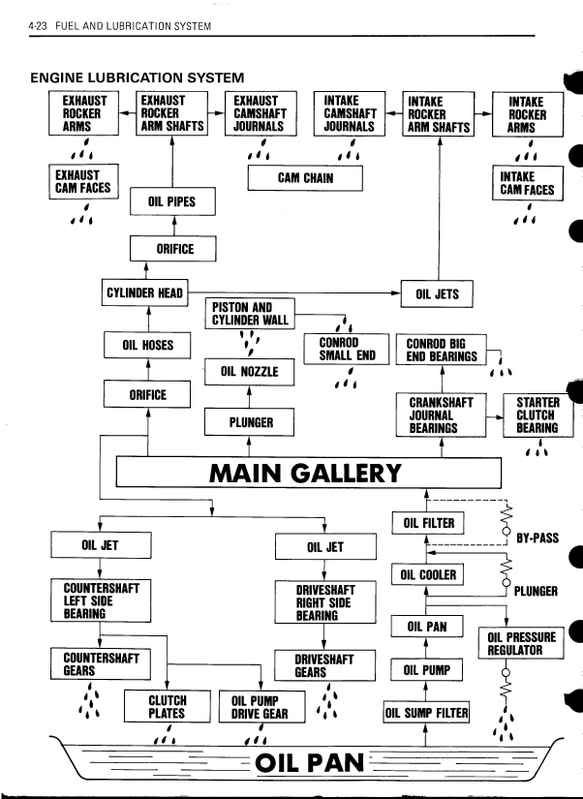
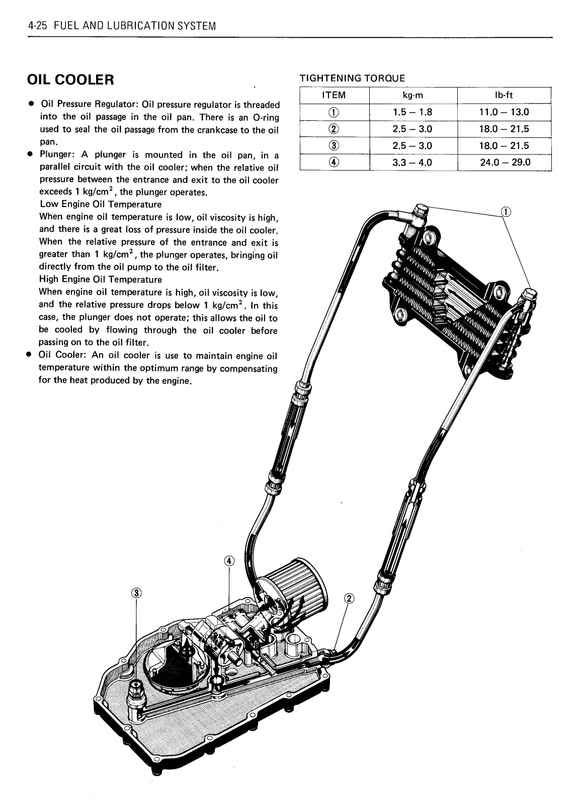
Here are the pages covering the lube system on '83 and up 700/750 models.
Oil1.jpg

oil2.jpg

oil3.jpg
 
On bikes designed with coolers from the factory...like the ES and the '83+ models...that's great, but for a 1981 model it's kind of pointless.

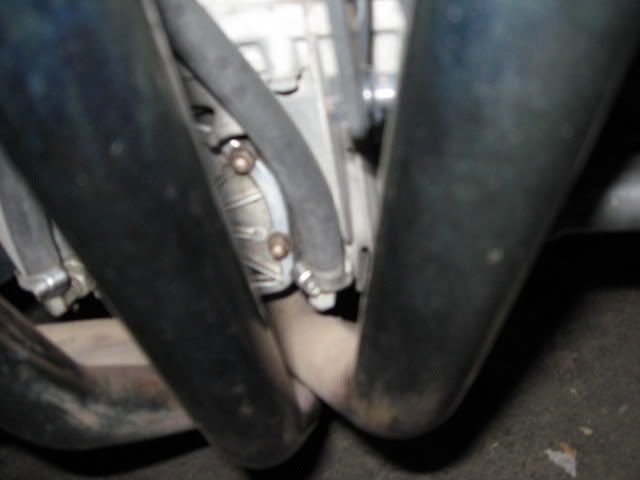
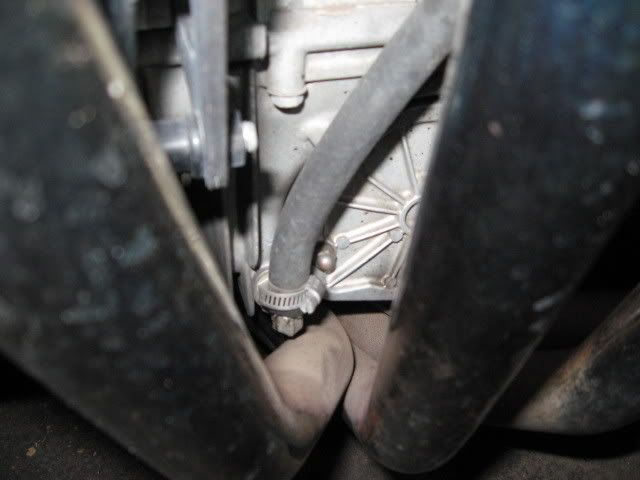
I've checked: My bike does not have ports aside the filter cover. One of the bolts under the pan may be a potential return but I don't believe any of them are plugs sans the drain...and I'm leery of having cooler lines UNDER the engine for obvious reasoning.

The USDM 16v 2nd Gen engine does NOT use the same kind of mounting for an oil cooler as the 1st gen engine, UNLESS it requires drilling the case in the same general location...which I am unwilling to do.

Here's the thing: I feel I really need an oil cooler. Temperatures exceeded 290*f while in traffic today. Now, I do not take my sensor's word as it is...I admit, the temperature reading is from a cooling fin, between the cams, so it is picking up a little more heat that usual, but I am not comfortable with what I am seeing.

I have a cooler kit for an 8v engine...if someone knows of a magic way to make it work with the 16v engine then fricken sweet I'll do it. Otherwise, I would like to sort out something else for the sourcing oil and where should it be returned.
 
Do you think that an oil cooler is going to reduce the temperatures you see between cooling fins? What's your oil temperature?

As for adding a cooler, to do it right you're going to need to understand exactly the path of your lubrication system as it exists now. Tapping into the plug on your oil filter cover is extracting oil on its initial path to the engine for lubrication. You cannot dump this back into the sump using a cooler. IMHO, it would create a low pressure path and the engine will suffer from a lack of lubrication.

The correct location of a cooler is shown in Billy's diagram. It's in line with the filter/pump and prior to being sent to the general lubrication system. If you add a cooler, there needs to be some restriction on the internal route that this oil normally flows, else it will not choose to flow through your cooler. You also need an injection point after the oil passes through the cooler on the other side of the restriction.

Unfortunately, I would guess there are more wrong ways of doing this than right.
 
Last edited:
While not ideal, as I've admitted, it's still going to be close to actual head temps. I did, however, discover that my temp sensor fits in the sensor port on the filter cover so I installed it there...not sure if it's working as of yet as I let it idle for about 5 minutes and still got no reading. I don't know what the min reading is for my Vapor.

Please understand first that I understand how a cooler system should work and where it should get oil from and where it should return it to. That's not in question here. It's a simple thing to do when the bike comes from the factory either setup for a cooler it's self or is based heavily on other models with coolers. This bike is neither of those. No cooler ports.

Also please understand that I'm not talking about running a 1" line off the cover into a 1-gallon cooler. I'm looking at 1/4"...actually, 1/4" is big in my opinion and may go smaller...because I understand that there needs to be a restriction in the flow to prevent it from being the universal "path of least resistance". I'm also trying to find ways to dump the oil that put it back into a proper area of flow.
 
Ok, all good.

The restricion you want, however, isn't in the feed to the cooler, but in the path the cooler is circumventing. That will insure that oil actually flows to the cooler.
 
Can you tap the oil from under the ignition cover? You'll have to make a return port. On dragbikes I've seen returns on the crankcase under the carbs and on the clutch cover.
 
Returning to the clutch cover is what I figure is easiest...returning to the head somewhere would be ideal but I don't know how to make that work properly.

Is there supposed to be a port under the ignition cover or do you mean drill and tap the case? I'll have to look up the oil flow again to know if that would be a pressure area.
 
On the 8V engines the oil pickup point is behind the cylinder where the oil pressure sensor is. These systems send 100% of the oil to the cooler and then return it back into the engine at the same location so it can go where it needs to - the bigger the lines the better. I don't know how the 2nd generation oil system works but your idea of only using a small amount of oil through the cooler may not be valid.
 
On the 8V engines the oil pickup point is behind the cylinder where the oil pressure sensor is. These systems send 100% of the oil to the cooler and then return it back into the engine at the same location so it can go where it needs to - the bigger the lines the better. I don't know how the 2nd generation oil system works but your idea of only using a small amount of oil through the cooler may not be valid.
His sensor is on the filter cover. He does not have this option.
:-\\\
 
Returning to the clutch cover is what I figure is easiest...returning to the head somewhere would be ideal but I don't know how to make that work properly.

Is there supposed to be a port under the ignition cover or do you mean drill and tap the case? I'll have to look up the oil flow again to know if that would be a pressure area.
There is a bolt under the ignition cover. This is a direct line to oil flow. Find out how to tap this. Same theory as plumbing an oil pressure guage.
 
gotcha chef...there is a source there. So...how do I plumb that to a cooler without killing too much pressure from the rest of the system? I'm not worried about dumping...I can tap the clutch cover, tap the top of the crankcase, or build a fitting to run it through the filler cap hole. As people here have stated, I'm just concerned about creating a permanent path of least resistance which has the system pushing all the oil through the cooler just because that's convenient and easy while the head gets sacrificed. I think a lot of the concern is cured through using small lines.

Opinions?
 
gotcha chef...there is a source there. So...how do I plumb that to a cooler without killing too much pressure from the rest of the system? I'm not worried about dumping...I can tap the clutch cover, tap the top of the crankcase, or build a fitting to run it through the filler cap hole. As people here have stated, I'm just concerned about creating a permanent path of least resistance which has the system pushing all the oil through the cooler just because that's convenient and easy while the head gets sacrificed. I think a lot of the concern is cured through using small lines.

Opinions?
I thought that id read somewhere that some guys used the 1100/1150 oil filter covers that had tapped holes for lines on the 750s...Maybe im mis-remembering.

One of the problems ive noticed in doing anything on the 2nd gen 750 motors is that the gallery bolt is at the BOTTOM of the cases. Not UNDER but on the side at the bottom...you know what i mean damnit.

Anyway, ive often wondered if this has anything to do with the oil flow problems on that particular motor. They're somewhat imfamous for losing cams, conrod bearings, crank bearings etc to starvation. My theory, and its just that, is a poor flow mapping design from inception. At any rate, YOU"RE question is one I will ponder. With the 8v motors and the low pressure 16v motors (1100) its not so important how fast the oil is pushed, just so long as there's enough volume to keep it flowing, and to keep the pump from cavitating. On the 16v 750 motor, its a low volume, high pressure design.... so is volume even more important?
 
Back
Top