
-
Required reading for all forum users!!!
Welcome!
Register to access the full functionality of the GSResources forum. Until you register and activate your account you will not have full forum access, nor will you be able to post or reply to messages.A note to new registrants...
All new forum registrations must be activated via email before you have full access to the forum.A Special Note about Email accounts!
DO NOT SIGN UP USING hotmail, outlook, gmx, sbcglobal, att, bellsouth or email.com. They delete our forum signup emails.A note to old forum members...
I receive numerous requests from people who can no longer log in because their accounts were deleted. As mentioned in the forum FAQ, user accounts are deleted if you haven't logged in for the past 6 months. If you can't log in, then create a new forum account. If you don't get an error message, then check your email account for an activation message. If you get a message stating that the email address is already in use, then your account still exists so follow the instructions in the forum FAQ for resetting your password.Have you forgotten your password or have a new email address? Then read the forum FAQ for details on how to reset it.
Any email requests for "can't log in anymore" problems or "lost my password" problems will be deleted. Read the forum FAQ and follow the instructions there - that's what we have one for...
-
Returning Visitors
If you are a returning visitor who never received your confirmation email, then odds are your email provider is blockinig emails from our server. The only thing that can be done to get around this is you will have to try creating another forum account using an email address from another domain.
If you are a returning visitor to the forum and can't log in using your old forum name and password but used to be able to then chances are your account is deleted. Purges of the databases are done regularly. You will have to create a new forum account and you should be all set.
You should upgrade or use an alternative browser.

where is the timing registering on the ground electrode?
http://www.dragstuff.com/techarticle...ark-plugs.html
Reading For Ignition Timing
Ignition timing is directly responsible for the heat in the combustion chamber and therefore the color of the plug’s ground strap and the color of the first few threads on the outside of the plug. The ignition timing can be checked by looking at the color of the plug’s ground strap and the position of the "blue line" on the strap.
for #3...
If you see the porcelain take on a shine then it is time to change the plugs because the glass that is in the porcelain has been melted and has glazed the surface.
***edit***
for #2 and #3
Other Things To Look For
The round flat circular area of the plug at the end the threads should be dark gray or flat black and should not be sooty. If it is sooty then it can mean that your plug has not been tightened enough and you are sucking and blowing fuel and air past the threads of the plug.
Detonation shows up on the plugs as spotting on the porcelain. There are two different types of spotting seen. One type appears as just black spots and the other appears as little bright spots like diamonds. The black spots (look like pepper sprinkled on the plug) indicate a little too much heat on the plug which causes detonation by having the heated plug fire off the mixture prior to the spark firing.
I think it will be best to install those shiny new plugs and re-read them.
***my un-educated guess? you're running very close to the ragged edge.***

Pos, I would be concerned with #2 and #3. what material do the flecks on them look like; fuel deposits, aluminum?
where is the timing registering on the ground electrode?
http://www.dragstuff.com/techarticle...ark-plugs.html
for #3...
***edit***
for #2 and #3
I think it will be best to install those shiny new plugs and re-read them.
***my un-educated guess? you're running very close to the ragged edge.***
Yea I think I have some plug chops coming in my immediate future. I have the coil mod relay installed, but have not put the Dyna-S back in. I need to do that and set the timing on the front v.s. back as you are right. 2 and 3 seem hotter than 1 and 4.
Of course you realize I had just gotten back from a 2500 mile trip to Oregon which included alot of riding at 3000 ft and above. I normally ride at less than 1000 ft.
Question, can you do a plug chop with a cleaned plug or does it need to be new? I don't mind buying another set of the Iridium NGK's but several sets might be pricey.
how about a nice new set of stock NGK plugs for reading and adjusting the timing, then screw in the iridiums.

when you went higher in elevation there is less O2...
Pos, I think once they have been glazed your done. you can try and it may work just fine for reading the insulators. but the ground strap reading is done...
how about a nice new set of stock NGK plugs for reading and adjusting the timing, then screw in the iridiums.
Well I guess I will just have to try it that way. Get close with the regular NGK and then maybe even cycle through a set of Irridiums that are intended for my bone stock GS750.
What you could do when you install the Dyna is, take a few extra degrees out of the timing and work your way up.
when you went higher in elevation there is less O2...
Well from the looks of it;
a.) I was running rich as there was black smoke and soot coming out my tail pipe at elevation
b.) The inner cylinders are certainly running hotter and need some special treatment other than richer mixture.
c.) My two other options seem to be timing and plug heat range.
I think I will want to adjust the dyna so that I get the 15 deg stock advance on #1 and #4 and back off #2 and #3 to 10-12 degree and do the plug chop. ideally I can get them all into the same area for ground strap reading. With clean plugs who know the looks of the plugs are likely to change a little.
a possible vacuum leak, needle height, ect?
***edit***
are the differences in the plugs caused by the exhaust?
set the timing and go from there.
#3 is still hotter than #2.
a possible vacuum leak, needle height, ect?
***edit***
are the differences in the plugs caused by the exhaust?
set the timing and go from there.
Well I hope all my needles are the same and I am running 147.5 Mikunis all the way across.
Certainly #2 and #3 are not identical but they appear warmer than the outside.
I have changed the exhaust spigots and now have some high heat RTV to help seal them.
I did recently remove and oil the K&N's so that might explain part of the issue but would need to get a fresh reading after these changes.
I would also be hesitant to also change timing but both inside plugs seem to be hotter and the warning in the article would seem to make reducing the timing on #2 and #3 prudent.
supersonictoys
Guest
 this motor had C-16 VP fuel in it(about 118 octane with detonation inhibitors) at about 15 pounds boost but the injection defueled because the bike was on the rev limiter too long.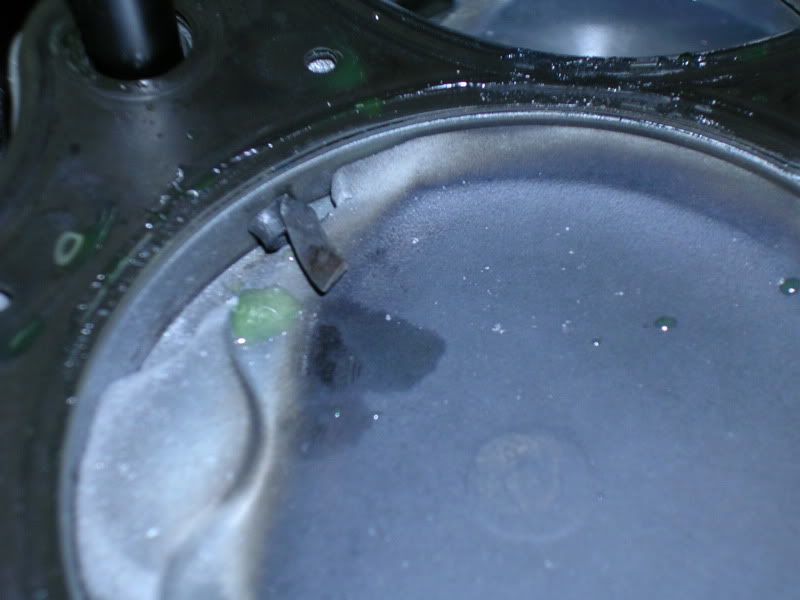
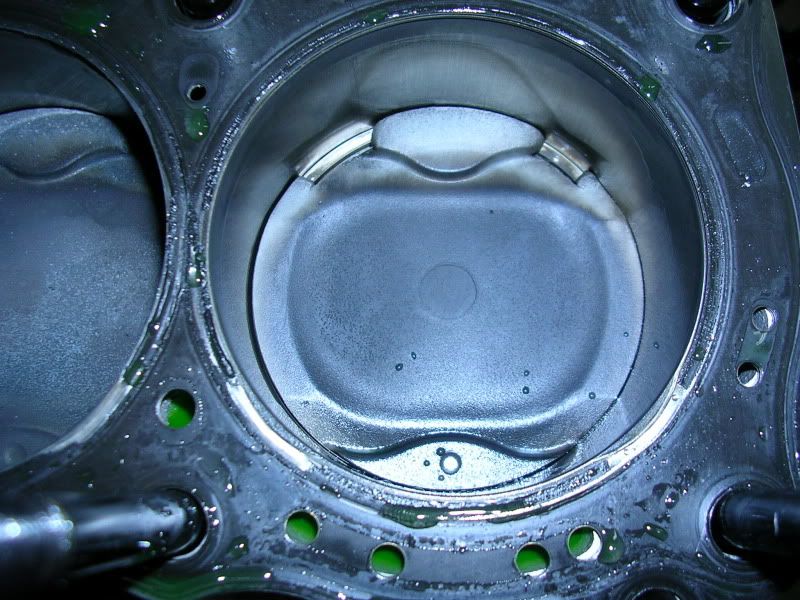
those differences, between 1-4 and 2-3, may only be caused by a stock pickup coil being mis-positioned (or at least in part)... something else to consider.Certainly #2 and #3 are not identical but they appear warmer than the outside.
I would also be hesitant to also change timing but both inside plugs seem to be hotter and the warning in the article would seem to make reducing the timing on #2 and #3 prudent.
those differences, between 1-4 and 2-3, may only be caused by a stock pickup coil being mis-positioned (or at least in part)... something else to consider.
could be, I will check the timing before swapping out the OEM ignitor

http://www.strappe.com/plugs.html
I was reading and rereading this link that RustyBronco posted. It corroborates what Ray and Ian were saying but provides more details. Sounds like we need to figure out where the timing needs to be set and then work mixture and heat range from there.
Thanks RustyBronco for for a great link.
It's refreshing to see that respected tuners some twenty odd years ago weren't afraid of seeing their ceramics white to the base. It has always been my contention that the hemi engines thrive on this coloured ceramic. As the article says, there is more cooling effect occuring at the plug on the hemi engines as opposed to the TSCC engines. This is reflected somewhat in the differing amount of advance that each engine will accept too.
Guest
Guest
10/25-1 compression. May have been compromised my a hack machined head.man that's nasty! thats some pretty wild looking detonation. I have melted down a couple motors from detonation and the aluminum usually looks less porous but I stopped pretty quickly as I did it all in less than 7 seconds. was this bike detonating all the time? even while cruising at a constant speed?? I know Wiseco offers these kits in different compression ratios. what was the compression of the kit you were running? here are a couple picks of a turbo busa motor I melted down a few years ago. see how smooth everything looks? how hot do you figure it got to melt a ring like that??
It was not detonating that I could hear. There was slight pinging on the needle at sea level but I spent most of the ride above 4000 feet where it ran rich.
A rich mixture won't help a bit.It was not detonating that I could hear. There was slight pinging on the needle at sea level but I spent most of the ride above 4000 feet where it ran rich.
You set the timing, then check the main jetting and finally the needle/transition circuits.We cannot stress too strongly the need to give spark advance your closest attention, because excessive spark lead is the most frequent cause of detonation, which is a real engine killer. You can't stop advance-produced detonation with a cold spark plug, nor with anything but a wildly over-rich mixture.
I check spark plugs with a 7X eye loupe and a heck of a bright light (sunlight is best).
***EDIT***
more...
So how can you tell whether you've chosen the right heat range? It's easy: a spark plug should be getting hot enough to keep its insulator nose completely clean, with all deposits burned away, but not so hot that its electrodes show signs of serious overheating.
The fuel film mentioned here is what you watch when making fine adjustments in ignition advance. In an engine that's been given just a few degrees excessive advance (as most have) the fuel film will only extend outward along part of the center electrode's exposed length, ending abruptly a couple of millimeters from the tip.
you'll have the correct spark advance when the center electrode's fuel film continues right out to within a hair of its tip.
don't forget to read...
http://www.dragstuff.com/techarticles/reading-spark-plugs.html