• Required reading for all forum users!!!

    Welcome!
    Register to access the full functionality of the GSResources forum. Until you register and activate your account you will not have full forum access, nor will you be able to post or reply to messages.

    A note to new registrants...
    All new forum registrations must be activated via email before you have full access to the forum.

    A Special Note about Email accounts!
    DO NOT SIGN UP USING hotmail, outlook, gmx, sbcglobal, att, bellsouth or email.com. They delete our forum signup emails.

    A note to old forum members...
    I receive numerous requests from people who can no longer log in because their accounts were deleted. As mentioned in the forum FAQ, user accounts are deleted if you haven't logged in for the past 6 months. If you can't log in, then create a new forum account. If you don't get an error message, then check your email account for an activation message. If you get a message stating that the email address is already in use, then your account still exists so follow the instructions in the forum FAQ for resetting your password.

    Have you forgotten your password or have a new email address? Then read the forum FAQ for details on how to reset it.

    Any email requests for "can't log in anymore" problems or "lost my password" problems will be deleted. Read the forum FAQ and follow the instructions there - that's what we have one for...

  • Returning Visitors

    If you are a returning visitor who never received your confirmation email, then odds are your email provider is blockinig emails from our server. The only thing that can be done to get around this is you will have to try creating another forum account using an email address from another domain.

    If you are a returning visitor to the forum and can't log in using your old forum name and password but used to be able to then chances are your account is deleted. Purges of the databases are done regularly. You will have to create a new forum account and you should be all set.

Tank rust - salvageable?

  • Thread starter Thread starter Joe Garfield
  • Start date Start date
J

Joe Garfield

Guest
Hello,

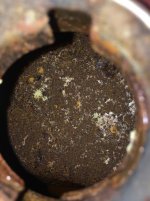
I am interested in a bike that has been sitting for a long time. I don't mind the mechanical work but am not sure what to think of the gas tank. I have this pic and was wondering if anyone has restored a tank in similar shape and what it entailed. Truthfully I would like to have someone else restore the inside of the tank but imagine it would cost too much conisering what the bike is worth. I don't mind painting the outside.

The bike is an '81 GS750LX which has been sitting in a garage for 15 years or something. Onlly 6500 miles, all within one family.

I appreciate any comments, thoughts, advice, etc. as I'm not sure what to do with this one. The asking price is $700. The bike looks nice, has rust on the chrome shock springs... If the engine and other moving parts are not seized (and the tank is reasonably salvageable) I think I would want to make an offer.

Thanks,
Joe G.
 

Attachments

  • Tank Rust 1.jpg
    Tank Rust 1.jpg
    94.8 KB · Views: 0
It may take some doing, but if the walls of the tank are not crumbling away, it is probably salvageable. There are lots of threads here on tank restoration. If it's not simply surface rust, you may have to line the tank, which is not a difficult or expensive process.
 
I saw a video of a guy pouring nuts, bolts, washers, etc into his rusted tank, then wrapping it in blankets and putting it in the dryer. It came out squeaky clean.

Two notes: no heat in the dryer, and no wife in the house.
 
I saw a video of a guy pouring nuts, bolts, washers, etc into his rusted tank, then wrapping it in blankets and putting it in the dryer. It came out squeaky clean.

Two notes: no heat in the dryer, and no wife in the house.
I know a redneck kinda guy out in Nebraska (not a member of this forum) that has done that with his small cement mixer.

He wraps the tank, then sticks it in the mixer and fills the space around it with foam rubber.
Partly for the cushioning, but mostly for noise abatement.

He lets it run for a couple of hours, then re-positions the tank so the rotation will direct the loose hardware across different surfaces.

Takes a while, but works wonders.

.
 
Thanks for the replies guys. I guess what I'm after is how to figure out how badly the metal is affected (how to tell if it's surface rust or how far beyond). I have seen threads and some videos but not sure how many were as bad or not. Maybe the big blown up picture makes it look worse to me than it really is, not sure.
 
The "big blown up picture" that I see in the first post shows that it is a bit more than just "surface rust", which will have to be removed a bit to see how much is left.


.
 
Thanks for the replies guys. I guess what I'm after is how to figure out how badly the metal is affected (how to tell if it's surface rust or how far beyond). I have seen threads and some videos but not sure how many were as bad or not. Maybe the big blown up picture makes it look worse to me than it really is, not sure.

Well, the problem areas are always the bottom rear corners and the seam along the bottom edges. Those are the low spots where water sits and works away at it until the pinholes go through. Check those areas closely, poking with a pocket knife or screwdriver looking for holes. If those areas are not rusted through or show only light pinholes then the tank can be saved with some epoxy, possibly some fiberglass and a tank liner compound. Vinegar or apple cider vinegar works well for removing the interior rust without destroying the base metal and you can always get some naval jelly for the tougher spots if the vinegar doesn't do the trick after a few days of soaking. If you are capable of painting the tank then you are more than capable of fixing small areas of rust and pinholes before paint.


Mark
 
Ive had good luck on many tanks with double strength, 10% cleaning vinegar. Allen's makes them in 2.5L jugs and this stuff which is more effective than regular vinegar and makes for a good passive method of chemically converting the rust back to iron and oxygen. I've treated tanks much worse than yours with good results. Like others have mentioned, after treating you may find that you have pinhole leaks and these can addressed by soldering them closed or lining the whole tank with the likes of POR-15 or others.
 
Phosphoric acid works wonders. It can be picked up at Lowes or Home Depot. They use it to prep concrete for paint or epoxy. It will only eat rust and not the base metal. Oreillys sells a tank liner called red-kote. Supposed to be some good stuff. I haven't used it but am considering it for extra insurance on mine. Right now I'm just running it with bare metal in the tank.
 
If you use any of the acid options (phosphoric, muriatic or vinegar) be sure to rinse the tank well with baking soda-water solution. The exposed metal will start to oxidize within minutes of the rinse so I like to use a quality fork oil to line the tank. Fork oil is good because it contains additives that keep it 'sticky' so it will bond to the metal and stay evenly distributed until its flushed with gasoline. Ive used regular motor oil once and the oil clumped together into droplets on the wall of the tank and the space between them was rusty with a day. Be sure to add an inline fuel filter as there will be fine rust particles that would have remained the after the treatment.
 
If you use any of the acid options (phosphoric, muriatic or vinegar) be sure to rinse the tank well with baking soda-water solution. The exposed metal will start to oxidize within minutes of the rinse so I like to use a quality fork oil to line the tank. Fork oil is good because it contains additives that keep it 'sticky' so it will bond to the metal and stay evenly distributed until its flushed with gasoline. Ive used regular motor oil once and the oil clumped together into droplets on the wall of the tank and the space between them was rusty with a day. Be sure to add an inline fuel filter as there will be fine rust particles that would have remained the after the treatment.

I would agree with the inline filter, but if you experience weird fuel starvation issues at high rpm or while cruising suspect the inline filter. These bikes never had one from the factory and they are a tad picky.
 
Back
Top