• Required reading for all forum users!!!

    Welcome!
    Register to access the full functionality of the GSResources forum. Until you register and activate your account you will not have full forum access, nor will you be able to post or reply to messages.

    A note to new registrants...
    All new forum registrations must be activated via email before you have full access to the forum.

    A Special Note about Email accounts!
    DO NOT SIGN UP USING hotmail, outlook, gmx, sbcglobal, att, bellsouth or email.com. They delete our forum signup emails.

    A note to old forum members...
    I receive numerous requests from people who can no longer log in because their accounts were deleted. As mentioned in the forum FAQ, user accounts are deleted if you haven't logged in for the past 6 months. If you can't log in, then create a new forum account. If you don't get an error message, then check your email account for an activation message. If you get a message stating that the email address is already in use, then your account still exists so follow the instructions in the forum FAQ for resetting your password.

    Have you forgotten your password or have a new email address? Then read the forum FAQ for details on how to reset it.

    Any email requests for "can't log in anymore" problems or "lost my password" problems will be deleted. Read the forum FAQ and follow the instructions there - that's what we have one for...

  • Returning Visitors

    If you are a returning visitor who never received your confirmation email, then odds are your email provider is blockinig emails from our server. The only thing that can be done to get around this is you will have to try creating another forum account using an email address from another domain.

    If you are a returning visitor to the forum and can't log in using your old forum name and password but used to be able to then chances are your account is deleted. Purges of the databases are done regularly. You will have to create a new forum account and you should be all set.

Tool for Disassembling Forks - Question about the Nut

  • Thread starter Thread starter Mith
  • Start date Start date
M

Mith

Guest
I've partly disassembled one of the forks on my 1981 GS550L. I need to make the T-handled tool with the 19mm nut. Is the nut 19mm across the flats (as measured with a digital caliper)? I have the two springs and oil out of the fork but am trying to get the inner tube and piston out. I assume now is when I need the tool to remove the screw in the bottom of the fork.
 
ok, I was able to remove the screw without a tool. After getting the piston out, I see that there is no internal hex in the top of it for the T-handled tool to have held it anyway. This worries me because I'm wondering what prevents it from turning when I try to put it back together! Any thoughts? I need to take the inner tube out of the outer tube now so I can get the seal out.

Pete
 
If you have an impact wrench put the fork caps back on and hit the bottom allen with that. Heat it a little first to loosen the old loctite.
If you don't have one do a search. I know basscliff's site has a picture tutorial.
 
Before you put it back together just make sure the threads are clean and free to turn and you shouldn't have any trouble.
 
I have the fork all apart now. After getting the screw out I just slid the inner tube forward a few times and it knocked the seal right out and the tubes seperated. I'm reading through BassCliff's instructions for reassembly. I still think I may wind up with a problem when I reassemble since I don't have any way of holding the damper (piston) when I need to tighten the allen bolt.
 
Just finished my fork rebuild yesterday. Yes the 19mm is across the flats of the nut but if your "piston" doesn't have a hex recess in the top that won't help you anyway.

Another method I've seen people use on here is to buy a sacrificial broom stick and reassemble the inner and outer far enough to be able to extend the tubes as far as possible, then insert the broomstick into the inner tube all the way to the bottom then cut it so that you can screw in the top cap to put pressure on the "piston" at the bottom while you screw in the allen bolt from the bottom. If trying that I'd make sure a broom handle will fit inside the tube, maybe a large diameter dowel rod might be needed, not sure. Mine had the hex recess for the 19mm nut.
 
After reading through BassCliff's instructions and comparing my forks to the GS1000G that the instructions are for, I'm thinking that my reassembly will have to deviate. Specifically, I'm thinking that installing the new seal will come AFTER the inner-tube and piston are installed in the outer tube. I'm saying this because the inner tube can't very well be inserted through the new seal since it has the brass collar and steel collar on the end of it.

I think that I can drive the new seal in after the inner tube is installed using a piece of PVC with a cap on it. That way I won't scratch the inner tube.
 
Are your upper tubes clean and smooth enough that they won't ruin the new seals as they go through?
 
Reassembling Forks - 1981 GS550L

Reassembling Forks - 1981 GS550L

The tubes are clean and rust-free. I don't see how the inner tube can be installed if the seal is installed before the tube goes in. The inner tube has a collar on it that is larger in outer diameter than the tube itself. The 550L forks are not like the forks on the 1000.

Pete
 
The tubes are clean and rust-free. I don't see how the inner tube can be installed if the seal is installed before the tube goes in. The inner tube has a collar on it that is larger in outer diameter than the tube itself. The 550L forks are not like the forks on the 1000.

Pete

You are correct Pete. The 550 forks are completely different from the 1000 forks. Follow the instructions above to use a broom handle to lock the bottom portion of the fork while tightening up the allen screw from the bottom. The only part of the instructions that is incorrect is that you use a rake handle, not a broom handle. lol. Cut the wooden handle so when the forks are fully extended with no springs in the fork the top of the handle show two or three exposed threads, then insert the top nut and screw it down as far as required to put enough pressure on the bottom part of the fork so it will not turn as the allen bolt is screwed in.
Photo attached.
 
Last edited:
bump :D

use a broom handle to lock the bottom portion of the fork while tightening up the allen screw from the bottom.
Cut the wooden handle so when the forks are fully extended with no springs in the fork the top of the handle show two or three exposed threads, then insert the top nut and screw it down as far as required to put enough pressure on the bottom part of the fork so it will not turn as the allen bolt is screwed in.
Photo attached.

i've encountered what is supposed to be forks of a 1985 gk model and there's no internal hex socket either.

i'll try the above method unless there are other suggestions?

anyone know what's the factory procedure / tool for disasembling these forks?
 
You are correct Pete. The 550 forks are completely different from the 1000 forks. Follow the instructions above to use a broom handle to lock the bottom portion of the fork while tightening up the allen screw from the bottom. The only part of the instructions that is incorrect is that you use a rake handle, not a broom handle. lol. Cut the wooden handle so when the forks are fully extended with no springs in the fork the top of the handle show two or three exposed threads, then insert the top nut and screw it down as far as required to put enough pressure on the bottom part of the fork so it will not turn as the allen bolt is screwed in.
Photo attached.

Also ensure you use a metric rake handle!
 
bump :D

i've encountered what is supposed to be forks of a 1985 gk model and there's no internal hex socket either.

i'll try the above method unless there are other suggestions?

anyone know what's the factory procedure / tool for disasembling these forks?

PSYGUY just use the broom stick method, it will work fine. Remove the spring and oil then fit broomstick cut to length so 3 or 4 threads are showing so the top nut can be started and then just wind the top nut down to hold the gear (damper, etc.) firmly while undoing the hex screw. There is a factory tool, but I defy anyone to make one. Picture in the GS550 manual.
 
I see that this issue has basically been resolved, but thought I would add a bit for others that might read it.

I've partly disassembled one of the forks on my 1981 GS550L. I need to make the T-handled tool with the 19mm nut. Is the nut 19mm across the flats (as measured with a digital caliper)? ...
Yes, it's 19 mm across the flats. You can make a tool using about $5 of parts from your hardware store and no welder.
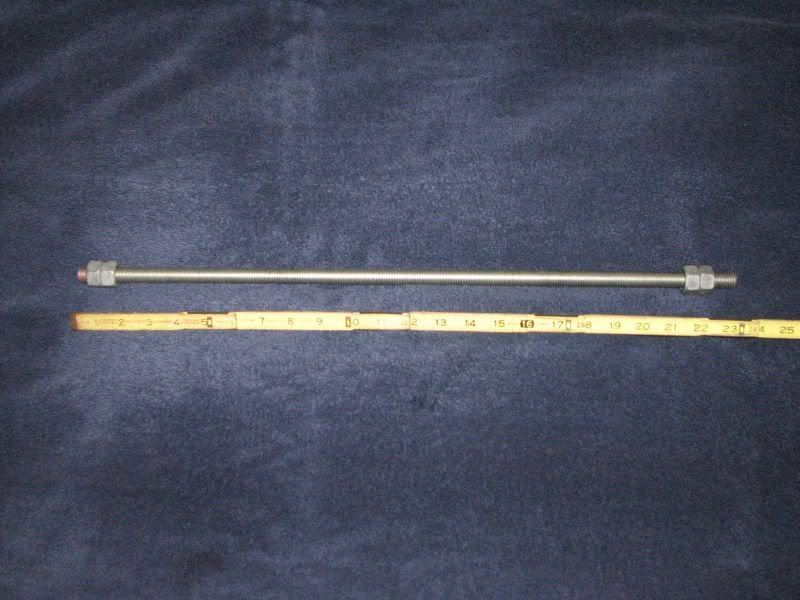
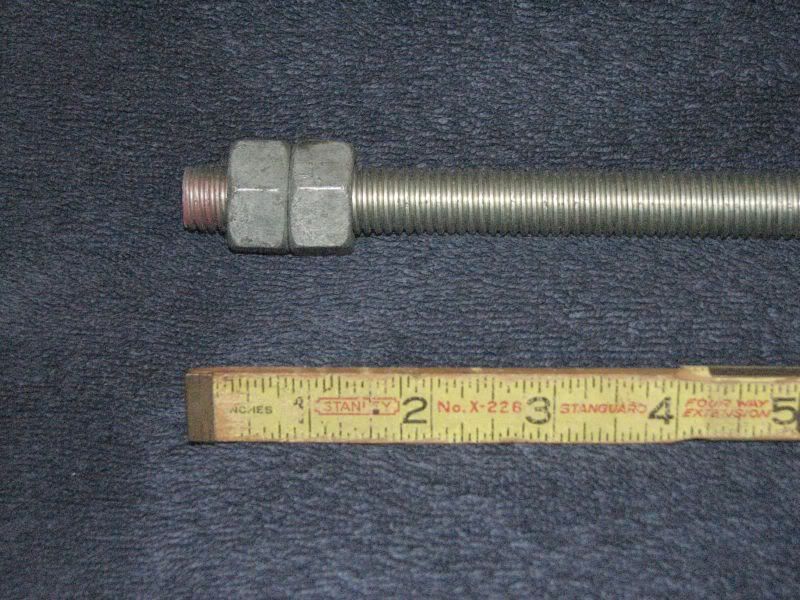
Get a 2-foot length of 1/2" all-thread rod and four nuts. Put two nuts on each end, leave about an inch of rod sticking out, jamb the nuts together.
Put the 'tool' into the fork leg, the rod that is sticking out will help locate it in the damping rod. Use a wrench on the inner nut on the upper stack to remove the damper rod.
IMG_2027.jpg


IMG_2032.jpg


If you have an impact wrench put the fork caps back on and hit the bottom allen with that. Heat it a little first to loosen the old loctite.
If you don't have one do a search. I know basscliff's site has a picture tutorial.
When re-assembling, remember it's the speed of the impact that will be doing the work. Be careful to not over-torque it.


After reading through BassCliff's instructions and comparing my forks to the GS1000G that the instructions are for, I'm thinking that my reassembly will have to deviate. Specifically, I'm thinking that installing the new seal will come AFTER the inner-tube and piston are installed in the outer tube. I'm saying this because the inner tube can't very well be inserted through the new seal since it has the brass collar and steel collar on the end of it.

I think that I can drive the new seal in after the inner tube is installed using a piece of PVC with a cap on it. That way I won't scratch the inner tube.
I have not read BassCliff's directions, but can't imagine installing the seal first. The best way I have found is to assemble the inner and outer fork legs, lube the seal so it slides nicely, slide the seal into place. I use a piece of PVC tubing as you suggest. The fork tubes on my 850s will just barely fit into the PVC, but not slide easily, so I cut a slit down the length so the PVC can expand just a bit. Make sure that the end of the PVC is cut squarely and that it's longer than the inner fork tube. Tap on the end of the PVC (yeah, a cap on the end might help), the seal gets driven into place very nicely.


The tubes are clean and rust-free. I don't see how the inner tube can be installed if the seal is installed before the tube goes in. The inner tube has a collar on it that is larger in outer diameter than the tube itself. The 550L forks are not like the forks on the 1000.
I have not worked on 550 forks for comparison, but I agree, the seal is almost the last thing to into the assembly.
 
[QUOTE

i'll try the above method unless there are other suggestions?

anyone know what's the factory procedure / tool for disasembling these forks?[/QUOTE]


why not leave the springs and spacer in the fork for tension to hold the lower dampening rod? I hit the bottom allen bolt with an air impact gun while pushing the assy down on a padded board.

no jam stick necessary.

lord the previous owner stories - why my forks do not work!!
still pulling splinters out of the forks???


previous owner used red loctite??? get a propane torch and heat up the bolt itself to break the adhesive--then hit it with the impact gun while alternating pushing and pulling the fork assy.

A set of soft jaws for the vise is a good tool accessory to have too.
 
If you have an impact wrench put the fork caps back on and hit the bottom allen with that. Heat it a little first to loosen the old loctite.
If you don't have one do a search. I know basscliff's site has a picture tutorial.

[QUOTE

i'll try the above method unless there are other suggestions?

anyone know what's the factory procedure / tool for disasembling these forks?


why not leave the springs and spacer in the fork for tension to hold the lower dampening rod? I hit the bottom allen bolt with an air impact gun while pushing the assy down on a padded board.

no jam stick necessary.

lord the previous owner stories - why my forks do not work!!
still pulling splinters out of the forks???


previous owner used red loctite??? get a propane torch and heat up the bolt itself to break the adhesive--then hit it with the impact gun while alternating pushing and pulling the fork assy.

A set of soft jaws for the vise is a good tool accessory to have too.[/QUOTE]
Hmmmmmmmmmm
:D
 
i'm not a fan of any method that doesnt allow for a proper torque adjustment which is needed for the bottom allen key bolt.

not everyone has an impact air gun either.

i tried disassembling the fork with the spring in place but that puts a bugger all pressure on the bolt and the whole thing just rotates in place.

broom/rake stick it is, i say, and definitely a metric one. :D


but i'm still qurious to know what the factory tool looks like for this job.
 
i'm not a fan of any method that doesnt allow for a proper torque adjustment which is needed for the bottom allen key bolt.

not everyone has an impact air gun either.

i tried disassembling the fork with the spring in place but that puts a bugger all pressure on the bolt and the whole thing just rotates in place.

broom/rake stick it is, i say, and definitely a metric one. :D


but i'm still qurious to know what the factory tool looks like for this job.

PSYGUY, I am off to cricket now, but will scan a picture when I come in this afternoon and put it up for you.
 
I've had the stock forks on my 700 as well as a set of '88 GSXR forks completely apart. I didn't use anything to hold the damper rods on either set. I simply used the allen wrench on the bolts on each set without holding anything in place. With both sets they came apart and reassembled with no problems.
 
Back
Top