Hi,
This is the reason for my thoughts on the matter:
From
http://www.totalmotorcycle.com/maintenance/sparkplugs.htm
Hot and Cold Sparkplugs
Tip: It is better to fix the problem than to change the sparkplug to patch it up.
Why Hot and Cold Sparkplugs? Using a hotter or colder sparkplug can be just the fix to an engine problem. Very basely, if your motorcycle engine is running hot then try using a colder plug, if it is running hot try a colder plug.
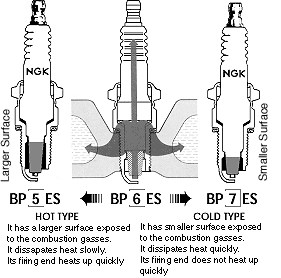
NGK diagram showing insulator and heat range
Hot Plug
- has a longer insulator nose length
- less heat is absorbed by the plug and transferred to the cooling system
- the plug runs at a higher temperature
- the plug is more prone to pre-ignition (if greater than 850 degrees C)
- NGK BP5ES is hotter than a BP7ES plug.
- An overheated plug will be white with brown spots.
Cold Plug
- has a shorter insulator nose length
- more heat is absorbed by the plug and transferred to the cooling system
- the plug runs at a lower temperature
- the plug is more prone to fouling (if less than 500 degrees C)
- NGK BP7ES is cooler than a BP5ES plug.
- A fouled plug will be black and sooty.
******************************
Howstuffworks.com says...
Some cars require a
hot plug. This type of plug is designed with a ceramic insert that has a smaller contact area with the metal part of the plug. This reduces the heat transfer from the ceramic, making it run hotter and thus burn away more deposits.
Cold plugs are designed with more contact area, so they run cooler.
The carmaker will select the right temperature plug for each car. Some cars with high-performance engines naturally generate more heat, so they need colder plugs. If the spark plug gets too hot, it could ignite the fuel before the spark fires; so it is important to stick with the right type of plug for your car.
*****************************
Thank you for your indulgence,
BassCliff