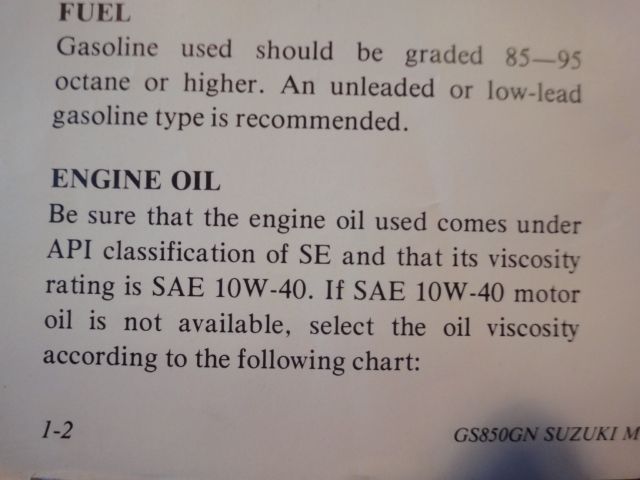
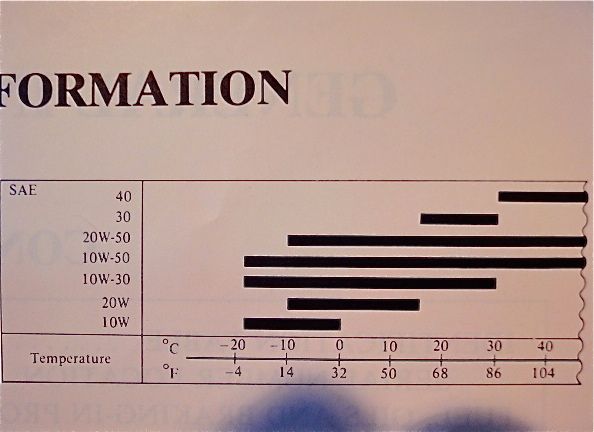
Yes, as Steve says, the W number indicates cold temp flowability; 10W flows easier than 20W, etc. The highest is 30W. As oils get thicker than this there is no real point of testing the cold flowability since that stuff don't flow for crap.
The second number is the viscosity rating at 100 C* - the higher the thicker of course.
So 20W-50 and straight 50 will have the same high temperature thickness, only the 20W-50 will flow decently at low temps but the 50 won't. Personally, I'm not aware of any advantage in using straight weight oil, or an oil with a higher W number.
Straight weight oils have less additives in them which some people think is better under some situations. A number of years ago this may have had some value but that's pretty questionable these days for a road going vehicle.
The second number is the viscosity rating at 100 C* - the higher the thicker of course.
So 20W-50 and straight 50 will have the same high temperature thickness, only the 20W-50 will flow decently at low temps but the 50 won't. Personally, I'm not aware of any advantage in using straight weight oil, or an oil with a higher W number.
Straight weight oils have less additives in them which some people think is better under some situations. A number of years ago this may have had some value but that's pretty questionable these days for a road going vehicle.
Last edited: