• Required reading for all forum users!!!

    Welcome!
    Register to access the full functionality of the GSResources forum. Until you register and activate your account you will not have full forum access, nor will you be able to post or reply to messages.

    A note to new registrants...
    All new forum registrations must be activated via email before you have full access to the forum.

    A Special Note about Email accounts!
    DO NOT SIGN UP USING hotmail, outlook, gmx, sbcglobal, att, bellsouth or email.com. They delete our forum signup emails.

    A note to old forum members...
    I receive numerous requests from people who can no longer log in because their accounts were deleted. As mentioned in the forum FAQ, user accounts are deleted if you haven't logged in for the past 6 months. If you can't log in, then create a new forum account. If you don't get an error message, then check your email account for an activation message. If you get a message stating that the email address is already in use, then your account still exists so follow the instructions in the forum FAQ for resetting your password.

    Have you forgotten your password or have a new email address? Then read the forum FAQ for details on how to reset it.

    Any email requests for "can't log in anymore" problems or "lost my password" problems will be deleted. Read the forum FAQ and follow the instructions there - that's what we have one for...

  • Returning Visitors

    If you are a returning visitor who never received your confirmation email, then odds are your email provider is blockinig emails from our server. The only thing that can be done to get around this is you will have to try creating another forum account using an email address from another domain.

    If you are a returning visitor to the forum and can't log in using your old forum name and password but used to be able to then chances are your account is deleted. Purges of the databases are done regularly. You will have to create a new forum account and you should be all set.

Time to replace my R/R

  • Thread starter Thread starter Adler
  • Start date Start date
Most splendid.

Any idea what Im going to do with the extra positive and negative wires?
I suggest the following:
Red wire 1 - factory wiring harness
Red wire 2 - 20 Amp fused to battery 12+ terminal
Green wire 1 - original R/R ground point
Green wire 2 - to battery 12- terminal

Or you could just tie them together. ;)
 
Hi,

Any idea what Im going to do with the extra positive and negative wires?

This is what I did: I put one ground wire on the negative battery terminal and the other on a common frame ground, where I have a couple of relays grounded. One 12v output goes into the normal harness connector and the other is connected directly to the positive battery post through a 15 amp inline fuse.

You could also splice the greens together and the reds together and use them as single wires.

Thank you for your indulgence,

BassCliff

Edit: Mr. kk types faster than I do when I'm on my phone. ;)
 
Last edited:
Hi,


This is what I did: I put one ground wire on the negative battery terminal and the other on a common frame ground, where I have a couple of relays grounded. One 12v output goes into the normal harness connector and the other is connected directly to the positive battery post through a 15 amp inline fuse.

You could also splice the greens together and the reds together and use them as single wires.

Thank you for your indulgence,

BassCliff

Edit: Mr. kk types faster than I do when I'm on my phone. ;)
I guess great minds think alike. :D;)
 
It's generally best to avoid adding connections to the battery terminals as this is a prime area for corrosion. Another reason is that wires have to be disturbed for battery service/replacement if connected there. Use another ground location such as the starter relay mounting bolts.

HIH

Norm
 
It's generally best to avoid adding connections to the battery terminals as this is a prime area for corrosion. Another reason is that wires have to be disturbed for battery service/replacement if connected there. Use another ground location such as the starter relay mounting bolts.

HIH

Norm

Yea except most Suzuki GS starter relays are mounted to a rubber mounted battery box or electrical panel, and the only ground path is though the grommet bushings. Better to go direct to the battery or frame.
 
This is one of the reasons for the "star" ground configuration prefered by some. While I find it a bit silly, you can find any point or points for your grounds other than the battery terminal(s). My MotoBatt battery has 2 positive and 2 negative posts, so it is a non-issue for me. However, you can always bridge the grounds as well. IOW, connect 2-3 ground points together, with only one ground wire going to the battery terminal.
 
Hi,

It's generally best to avoid adding connections to the battery terminals as this is a prime area for corrosion. Another reason is that wires have to be disturbed for battery service/replacement if connected there. Use another ground location such as the starter relay mounting bolts.

Thank you for this good advice. I totally agree. This could easily be an issue for someone who does not properly maintain their motorcycle. A little preventative maintenance can go a long way toward avoiding problems and failures.

I usually check and clean electrical connections at every valve check because I've already removed the tank, seat, side covers, etc. It's easy to tinker with the wiring harness while I'm there. I encourage others to do the same because sometimes you can't see corrosion but it still adds resistance.

Thank you for your indulgence,

BassCliff
 
This issue is especially important for the 1100E models. The air filter box must be removed for access to the battery, which is not an easy nor simple task. Of course, we all know the importance of proper maintenance and do it religiously, correct? ;)
 
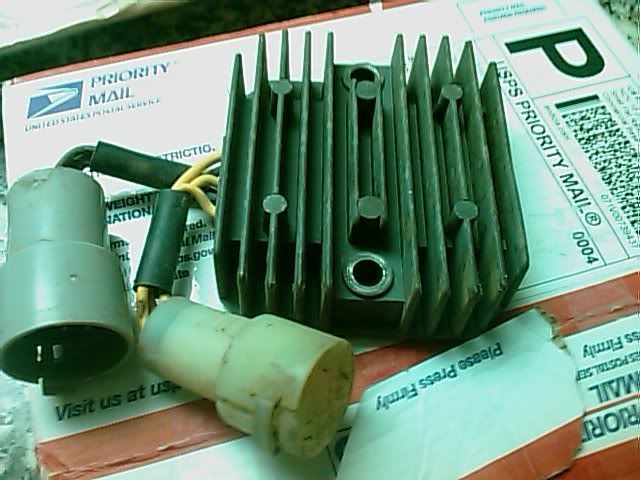
Got this in the mail yesterday...

IMAGE_172.jpg


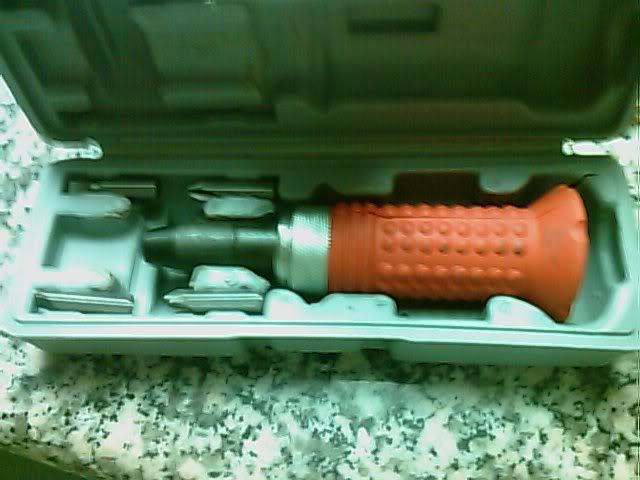
Also this, about time... :rolleyes:

IMAGE_170.jpg
 
That's a "Must have":dancing:. I have owned one for 25 odd years if not more.

I have used it less that 20 times altogether. But When you reach for it. IT WORKS.

Last week I had this mushed up screw on a carb. (Don't know why anyone would reuse such a thing. Must have a bitch to screw that in)

Magic. Just magic.

DP

I had one for a few days about a year ago but I returned it when I thought about how much I paid for it... Full price at Crappy Tire is now against my policy :rolleyes:. That one was around 50 bucks, this one was a whopping 12.
 
I always wait til Canadian Tire has a tool sale. It's usually good for 50% off list price. l agree that regular prices for tools is outrageous.
 
Turns out my wire colours are a little different.

I have;
3 yellow (good start :))
2 black (I assume ground)
2 white/red (assume positive)
1 grey (assume sense)

Does that sound right to you guys?
 
Sounds right. The one off a ninja that I have has 3 yellow (stator), black (ground), red/white (positive) and a brown sense wire.
 
Well, I wired it all up today and besides for some hard starting (its really cold out and I don't have a starter (boy is my leg sore)) its regulating like a pro. I can't make the voltage go above 15v, with the lights on the voltage is a little low though, around 10v. Bear in mind that I don't have a battery, this is running on a large capacitor.

One issue did come up. When I went to turn off the bike, I turned the ignition to off and the bike just kept running... Not sure how that happened. Thankfully the kill switch still works fine.
 
I suggest the following:
Red wire 1 - factory wiring harness
Red wire 2 - 20 Amp fused to battery 12+ terminal
Green wire 1 - original R/R ground point
Green wire 2 - to battery 12- terminal

Or you could just tie them together. ;)

Am I wrong in thinking that wiring the positive R/R to the battery positive effectively avoids the ignition switch?
 
Am I wrong in thinking that wiring the positive R/R to the battery positive effectively avoids the ignition switch?
Even the original R/R wiring bypassed the ignition switch! Get a battery installed ASAP, depending on a capacitor is risky- if it gets disconnected and bike is running, voltage could climb. A good charging voltage is 14.5. 13 is too low and 15.5 is too high. check ignition switch wiring to find out why it didn't turn off.
 
Even the original R/R wiring bypassed the ignition switch! Get a battery installed ASAP, depending on a capacitor is risky- if it gets disconnected and bike is running, voltage could climb. A good charging voltage is 14.5. 13 is too low and 15.5 is too high. check ignition switch wiring to find out why it didn't turn off.

It looks to me as though the ignition switch is bypassed only for the starting circuit which makes me wonder why the starter wouldn't work when the bike is off. Power to the bike, however, does go through the ignition switch.

I have attached a simplified version of the wiring diagram for my bike.

EDIT: How could voltage climb if the cap gets disconnected? The only effect of losing the capacitor should be flickering lights according to my current understanding of the system.
 
Last edited:
Yes, that would be wrong. The positive R/R lead is better connected to the battery than via the ignition switch as this simply adds load to the ignition switch contacts and voltage drop to the charging. The standard method is to connect alternator output to the battery/starter relay whether automotive, bike or what-have-you.

The alternator/charging system section whch may be switched by the ignition switch is the alternator sense wire in some permanent magnet alternators and the reference/initiate circuit for most controlled field alternators.

For using a capacitor to replace the battery, this is usually successful if the capacitor has sufficient capacity to absorb spikes. If you intend to use the capacitor for starting in place of a battery, you will need one honking big one!;)

Am I wrong in thinking that wiring the positive R/R to the battery positive effectively avoids the ignition switch?
 
Yes, that would be wrong. The positive R/R lead is better connected to the battery than via the ignition switch as this simply adds load to the ignition switch contacts and voltage drop to the charging. The standard method is to connect alternator output to the battery/starter relay whether automotive, bike or what-have-you.

The alternator/charging system section whch may be switched by the ignition switch is the alternator sense wire in some permanent magnet alternators and the reference/initiate circuit for most controlled field alternators.

For using a capacitor to replace the battery, this is usually successful if the capacitor has sufficient capacity to absorb spikes. If you intend to use the capacitor for starting in place of a battery, you will need one honking big one!;)

The capacitor is purely for kickstarting no starter for me.

New theory... The "sense" wire that I used is actually providing voltage instead of just "sensing" it. Maybe I have confused the wires...
 
The capacitor is purely for kickstarting no starter for me.

New theory... The "sense" wire that I used is actually providing voltage instead of just "sensing" it. Maybe I have confused the wires...
A capacitor would be happy to let voltage rise and fall ASAP- whereas a battery acts as "sink" to smooth things. Your sense wire is likely getting confused deciding what its output voltage is - I doubt that a R/R will like this for long. Perhaps, you should get a small 12 volt alarm battery (1.5 AH and smaller than cigarette pack) and see if things stabilze. You're not using the R/R as it was designed for.
 
Back
Top